Decentralized finance is no longer a slogan about “bankless” money. It is a set of protocols that move core financial functions onto programmable rails and show new tools and new fault lines.
What DeFi is, in practice
DeFi is an open stack of code that runs financial logic on blockchains. Core pieces are smart contracts, automated market makers and decentralized exchanges, lending protocols, and stablecoins. They rely on oracles for price and event data and on consensus for transaction order and finality, and those links decide how value moves on‑chain and where a technical fault can become a financial loss, a theme surveyed by the Federal Reserve’s overview of DeFi building blocks and stability channels in its FEDS paper.
Why DeFi matters now: institutional momentum and real productisation
The center of gravity has shifted from hobbyist experiments to products that fit established portfolios. A large asset manager’s 2026 outlook argues that tokenization and cryptoassets are birthing investible wrappers. Those wrappers range from tokenized money market funds to instruments that can settle around the clock, as described in BlackRock’s 2026 whitepaper.
Banks and fund managers are not waiting on the sidelines. In December 2025, J.P. Morgan Asset Management announced its first tokenized money market fund, MONY, issued on a public blockchain with on‑chain subscriptions and redemptions. The release highlighted stablecoin and cash rails for flows, and the operational transparency that comes from a shared ledger.
Market infrastructure follows the products. Tooling for wallets and APIs has improved since early coverage framed a possible tilt toward a “bankless” stack. That practical on‑ramp matters for usability and shapes how institutions can custody, account, and audit tokenized positions within existing systems.
For traditional players, integration is the test. We explored the operational and policy bridge in The Integration of Blockchain in Traditional Finance: Opportunities and Challenges. It maps where legacy process meets programmable settlement.
The promise: efficiency, new instruments and portfolio benefits
DeFi advertises speed and composability. Settlement that runs 24/7 cuts the drag from batch systems, and tokenized funds can be split into smaller units to help with access and collateral use. On‑chain records can reduce reconciliation friction and increase auditability.
Tokenization also unlocks new wrappers. A tokenized money market fund can serve as more fluid collateral within permissioned workflows and still be a familiar asset class. The J.P. Morgan MONY launch was pitched in that exact frame, with the nuance that the wrapper changes rails more than risk.
Portfolios may benefit at the margin. Institutional research suggests that small allocations to tokenized exposures could add diversification or liquidity in niches, though the case is context dependent. Product pilots and 24/7 rails are part of that exploration rather than a final verdict.
Yield is part of the appeal, and not just in a bull market. DeFi protocols pay fees to liquidity providers and depositors, often in native tokens or governance awards. That structure can create high nominal rates when activity is strong, but it also adds moving parts that an allocator has to price.
The risk taxonomy: technical, operational, governance and systemic channels
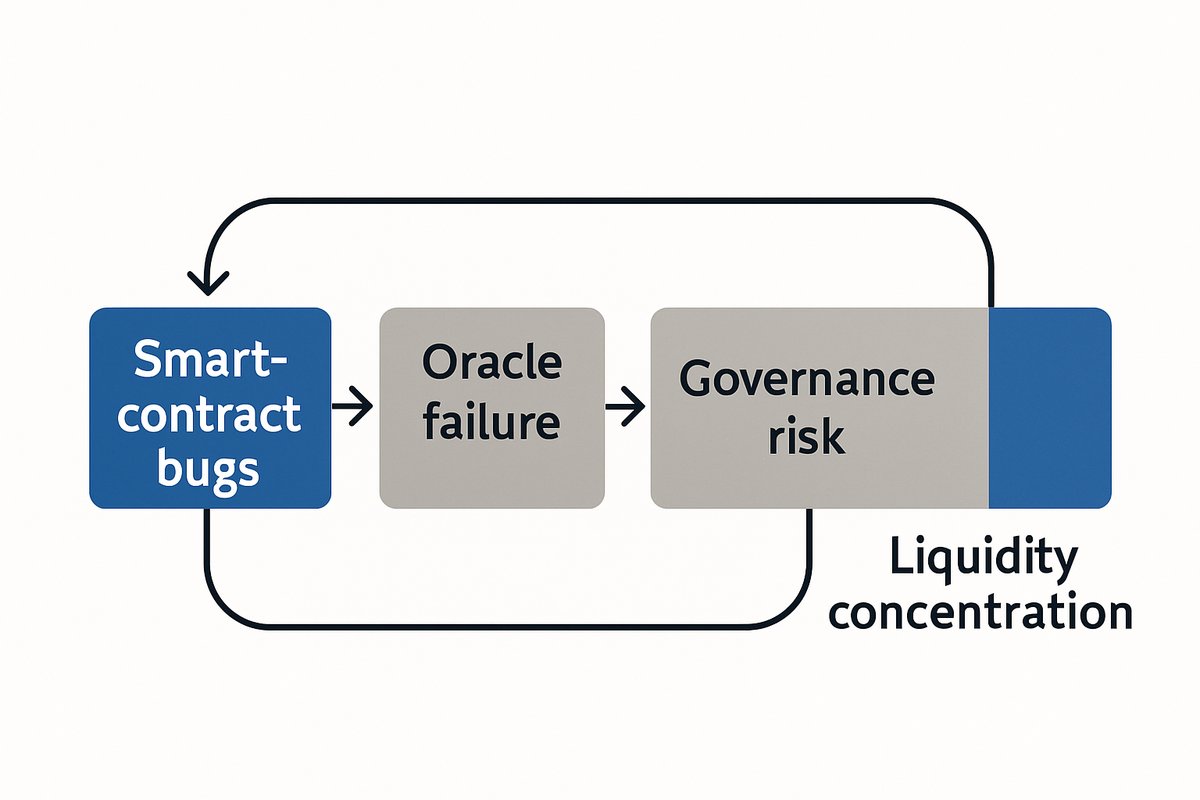
DeFi’s risks map to its architecture. Smart contracts can fail through bugs, economic design flaws, or poorly tested upgrades.
Oracles can deliver wrong or delayed data that triggers bad liquidations. The BIS documents specific fragilities, including liquidity concentration and the extractable value that comes from miners or validators ordering transactions, in its Working Paper No. 1061.
Operational risk follows the code paths. Composability means a failure in one module can ripple through protocols that stack on top of it. Concentrated liquidity can dry up under stress and turn price gaps into cascades.
Governance is often more centralized than the marketing copy implies. Upgrades may depend on a small set of signers, a foundation, or a handful of whales. Legal treatment of code, tokens, and liabilities remains unsettled in many places, and the Fed’s survey points to gaps in supervision and the channels that could transmit DeFi shocks to banks, as outlined in the FEDS analysis of regulatory ambiguity.
Systemic channels link on‑chain runs to off‑chain balance sheets. Stablecoins can face redemption waves if confidence breaks, and lending protocols liquidate collateral based on oracle prices. Those dynamics compress time and can force correlated selling across venues that look diverse until the same trigger hits them.
| Risk category | What to look for | Why it matters |
|---|---|---|
| Smart‑contract bugs | Audit history, formal methods, upgrades | Code errors can lock or drain funds |
| Oracle design | Data sources, update cadence, fallback | Bad data triggers wrong liquidations |
| MEV/front‑running | Mitigations, transaction ordering | Extractable value tax distorts incentives |
| Liquidity concentration | Depth across venues, concentration | Thin markets amplify price gaps |
| Governance centralization | Admin keys, quorum, vote power | Few actors can change rules |
| Legal/supervisory gaps | Jurisdiction, asset treatment | Unclear recourse during stress |
Investor behaviour and market dynamics that amplify fragility
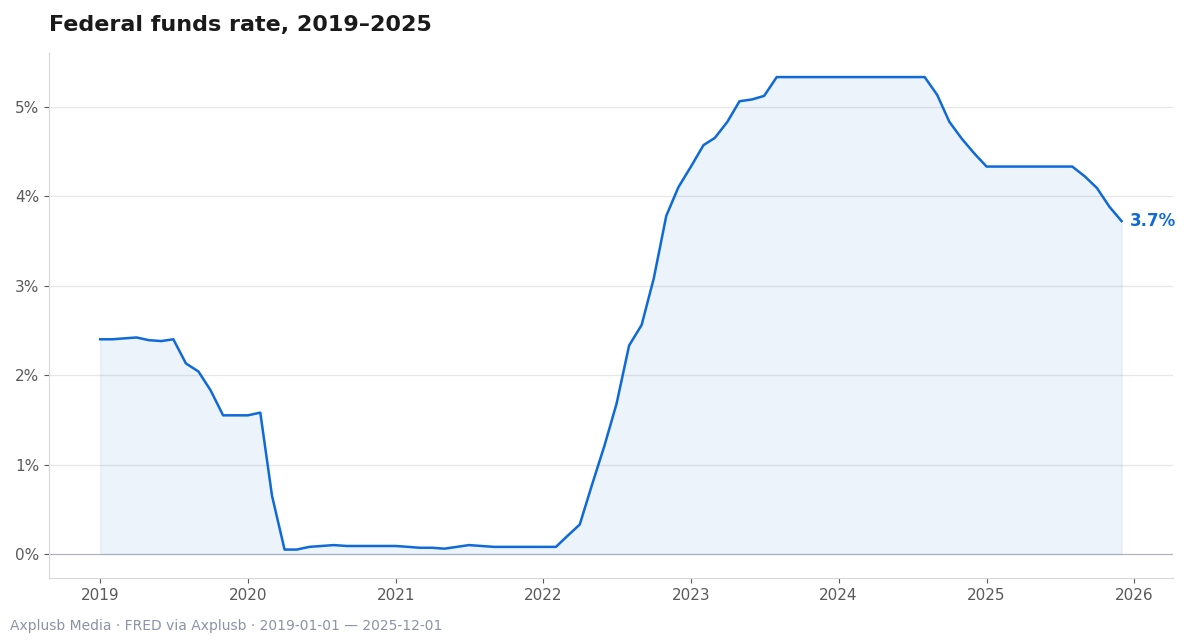
Human behavior leans into these structures. High headline yields attract flows to complex strategies. Those flows chase attention rather than risk‑adjusted value, and that can amplify tail risk when incentives change.
Complexity is its own risk. Many investors underestimate impermanent loss in liquidity pools or the reflexive nature of governance token incentives. Fast attention cycles shorten the time to decision and crowd positions.
Run mechanics are built into some designs. Collateral ratios in lending protocols auto‑enforce liquidations when prices fall. Those liquidations can push prices down further.
Supervisors are alert to this pattern. The Fed’s overview highlights run risk in stablecoin structures and the possibility that banks or dealers gain indirect exposure through custody, payments, or credit lines. That path does not require banks to own the tokens for contagion to matter.
For readers who frame these dynamics through psychology, see Behavioral Finance and AI: How Technology Can Help Mitigate Investor Biases . It shows tools that can help slow decisions when attention spikes.
Concrete episodes and early institutional cases
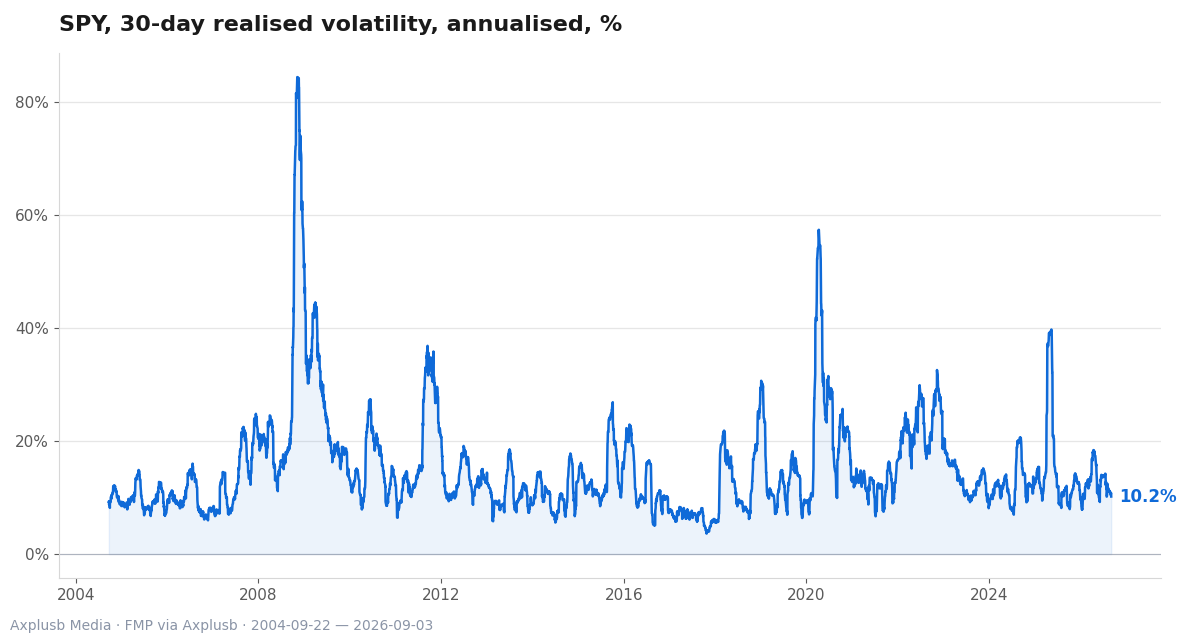
We have seen on‑chain liquidation cascades in practice, documented in BIS research alongside other operational fragilities. These were price and liquidity events that forced smart contracts to liquidate collateral and unwind positions across protocols.
Stablecoin wobble risk is a case in point. Peg pressure can trigger redemptions and collateral sales, with effects that spread through venues that share the same liquidity sources. The Fed’s analysis maps those channels to off‑chain actors when banks provide services to these issuers.
On the other side of the ledger, an early institutional case now exists. J.P. Morgan’s tokenized money market fund brought on‑chain subscriptions and redemptions to a familiar instrument and underscored settlement and collateral use as operational benefits. It illustrates how TradFi can test tokenized wrappers without rebuilding the entire trust stack.
Finally, industry research expects more tokenized funds, pilots, and rails to continue. The innovation path is pragmatic. It is more about product design and plumbing than ideology. That is a healthier place for due diligence.
Common misconceptions and the “decentralisation illusion”
“Trustless” is not a universal property. It is a trade with a set of dependencies. The BIS calls this a decentralisation illusion when control points cluster in validators, token voting blocs, or admin keys that can pause or change a protocol, a theme analyzed in BIS Working Paper No. 1061.
Data and ordering are chokepoints. Oracles anchor many positions, and MEV shows that transaction ordering can be profitable for those who can shape it. Those features can be mitigated but not wished away.
Legal reality also intrudes. Smart contracts operate in a human legal system that decides liability, enforceability, and property rights. The Fed’s survey stresses the ambiguity and the supervision gaps that arise when instruments straddle code and law and affect investor recourse.
Headlines that predict an overnight replacement of banks miss the hybrid path. Wallets, APIs, and on‑chain records open access, but custody, payments, and credit still rely on institutions. The most direct route to scale is a partnership model rather than a bonfire of intermediaries.
Counterarguments and the pro‑innovation case — why regulation should not snuff out utility
The case for calibrated policy is simple. Tokenization can deliver operational efficiency, broaden access to assets, and create new building blocks for product design. A heavy hand would cost those benefits without removing the risks that already exist in less transparent forms.
Institutional research argues for small, thoughtful allocations to tokenized exposures when they solve a clear problem, such as liquidity timing or collateral management. Those pilots can run inside strong governance and audit frameworks and inform broader rules.
Pragmatic regulation should aim to preserve the good while constraining the bad. Standardizing disclosure, mapping dependencies, and aligning custody with existing best practice are not anti‑innovation. They are the cost of real money joining the rails.
A balanced read of supervisory work supports that stance. The Fed’s overview points to risks and gaps but does not claim that programmable finance lacks merit. That leaves room for sandboxes, data collection, and iterative rulemaking that tracks the technology’s shape.
For a deeper risk‑policy view, see The Future of Decentralized Finance: Balancing Innovation with Robust Risk Protocols. It provides more detail.
How to assess and mitigate protocol risk — a practical framework
A simple checklist helps allocators and supervisors focus on what matters. It starts with the code, tracks the data inputs, and ends with governance and legal mapping, and it should be applied before any capital moves.
- Code quality: independent audits, formal verification, and a clear upgrade path with rollback rules.
- Oracle mapping: data sources, update cadence, failover logic, and conflict resolution.
- MEV and ordering risk: mitigations such as commit‑reveal, batch auctions, or trusted relays.
- Liquidity diagnostics: depth across venues, concentration in pools, and reliance on one market maker.
- Governance clarity: admin keys, quorum thresholds, token holder concentration, and emergency powers.
- Legal posture: jurisdiction, asset classification, custody arrangements, and dispute recourse.
- Interconnection map: dependencies across protocols and exposure to stablecoin pegs.
- Monitoring: on‑chain analytics, alerting for depegs and utilization spikes, and third‑party reporting.
Technical reviews argue for better auditing, improved protocol design, and scalability research to reduce failure modes. Supervisory work adds the need to monitor interconnections and to clarify where consumer protection starts and ends. Together, they form a baseline due diligence pack for any on‑chain exposure.
For risk teams, AI can help surface anomalies in real time and stress test flows before they matter. We examined the control benefits of automation in The Future of Finance: Integrating AI into Risk Management Frameworks.
Takeaways for investors and policymakers — small, operationally realistic steps
Start with wrappers you understand. A tokenized money market fund or a short‑duration credit token can be an operational test without rewriting portfolio policy. Set position limits, instrument the exposure, and write exit rules before entry.
Insist on auditability and custodial clarity. Map legal rights to the code path, and make sure reporting can tie on‑chain records to books and records. Use third‑party analytics for independent monitoring.
Supervisors can run sandboxes with real but small stakes and publish the telemetry. Interoperability studies should include custody, payments, and settlement chains, not only protocol logic, to learn how shocks travel and where to place circuit breakers.
Do not outsource judgment to hype or fear. Read the code reports, the governance docs, and the legal terms. Then decide what problem the product solves and whether that is worth the residual risk.
Check how disciplined your portfolio really is. Test how your risk framework would score a tokenized fund before allocation.
Related reading
- The Integration of Blockchain in Traditional Finance: Opportunities and Challenges
- The Future of Decentralized Finance: Balancing Innovation with Robust Risk Protocols
- Behavioral Finance and AI: How Technology Can Help Mitigate Investor Biases