Digital currencies are no longer a side story. For institutional investors, they now sit at the junction of monetary design, market plumbing and portfolio construction. This article maps where the channels are changing and what to do next. It uses central‑bank blueprints, empirical evidence, and institutional allocation frameworks.
Executive summary: what “digital currencies” mean for institutional investors
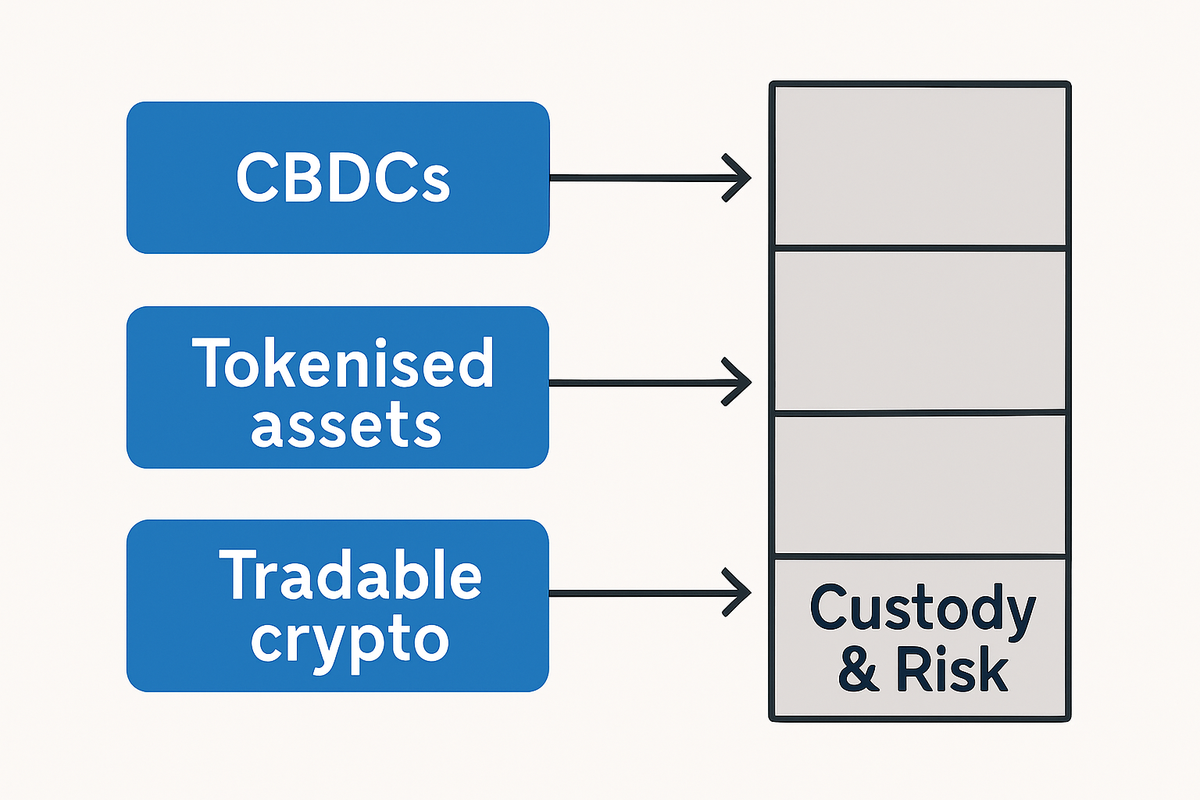
Digital currencies fall into three overlapping tracks. They are central bank digital currencies, tokenised versions of traditional assets and funds, and tradable crypto assets like bitcoin. Each track touches a different part of the operating stack. All press on custody, settlement, and risk budgeting.
Central banks describe a future “unified ledger” in which money and tokenised claims interoperate with near‑instant finality, within strong governance. That vision sits at the core of the Bank for International Settlements blueprint. The blueprint places CBDCs and tokenisation as building blocks for new market rails and flags interoperability and stability risks, as laid out by the BIS blueprint for the future monetary system.
The U.S. Federal Reserve’s work anchors a likely path for a dollar CBDC if policy advances. It centers on privacy, identity verification and an intermediated design. That design complements bank intermediation, not replaces it. That framing shapes how institutions should think about access, data governance and compliance.
The net is clear. Market plumbing will change and the product shelf will evolve, so asset allocators will face new channels for cash, collateral and risk assets. See our primer on CBDC design choices in Understanding Central Bank Digital Currencies: Implications for Investors.
Defining the landscape: CBDCs, tokenised assets and tradable crypto
Start with CBDCs. Wholesale CBDCs are digital central bank money restricted to financial institutions and aim for better settlement finality, atomic delivery versus payment, and functions that sync with tokenised assets. Retail CBDCs are versions for the public, with policy design focused on privacy, identity checks and keeping banks in the loop.
Tokenisation wraps traditional assets or funds into programmable tokens. It does not change the risk of the underlying instrument. It re‑platforms how the asset moves and settles. Large managers have already piloted tokenised money‑market funds and liquidity sleeves aimed at faster settlement and intraday liquidity choices for institutions.
Tradable crypto is a catch‑all for native digital assets like bitcoin that exist on public chains. Institutions can access them via products on traditional rails or by direct custody that engages on‑chain mechanics. The access path determines the operational burden and the types of risks that must be underwritten.
These distinctions are not academic. They shape who holds client money, what “finality” means, who is the record‑keeper of truth, and which controls satisfy regulators. They also define where portfolio exposures sit in the risk budget and who is accountable for vendor and cyber risk.
| Category | Scope | Who uses it | Primary institutional implication |
|---|---|---|---|
| Wholesale CBDC | Central bank money for institutions | Banks, FMIs, large dealers | Faster settlement finality, new DvP rails |
| Retail CBDC | Central bank money for the public | Households, firms via intermediaries | Privacy, KYC/AML, role of banks preserved |
| Tokenised assets/funds | On‑chain wrappers of traditional instruments | Asset managers, treasurers | Quicker settlement, programmable cash and collateral |
| Tradable crypto | Native digital assets (e.g., bitcoin) | Asset owners, hedge funds | Volatile risk exposure, access via ETFs or direct custody |
Why it matters now: policy, productisation and market access
Policy work has moved from white papers to architecture. The BIS lays out how a unified ledger could bring money and tokenised claims onto shared rails, with governance and interoperability standards as first‑order design choices. That blueprint shortens the imagination gap for bank treasuries, custodians and exchanges planning for future state workflows.
Product development is no longer hypothetical. Global managers have launched tokenised money‑market funds designed for institutional liquidity, with operations that target faster settlement and improved intraday flexibility. The feature set speaks to treasury needs during stress, not just innovation theatre.
Access to crypto exposures has also broadened through products that sit on traditional rails. That expansion reduces friction for policy‑constrained investors and shifts custody, audit and reporting obligations onto known intermediaries. It also raises a live question about the tradeoff between ease of access and control over the underlying asset.
Portfolio policy is the third accelerant and institutional research has framed risk budgeting for volatile assets in a standard way, by sizing to risk contribution rather than absolute weight. This lens keeps the conversation grounded in portfolio math instead of headlines and helps investment committees match conviction to risk.
If you are mapping how payment innovation and asset rails converge, we suggest reading The Future of Payment Systems: How Digital Currencies Are Reshaping Transactions. See the link.
Common misconceptions institutions make (and the evidence that contradicts them)
Not all crypto flow is speculative noise. An academic study used high‑frequency off‑chain data and found a non‑trivial share of bitcoin trades serve transactional and cross‑border payment roles, estimated at over seven percent of activity. That result points to a transactional core that can shape liquidity dynamics, as reported in an NBER working paper on international capital flows.
CBDCs do not imply automatic bank disintermediation. The U.S. Federal Reserve’s discussion paper emphasizes an intermediated CBDC model, with identity verification and privacy controls, and a design that complements existing intermediation. For banks and their clients, that means distribution and compliance remain central even as the money format changes.
Technical rollout does not neutralize operational risk. A BIS risk report catalogues information security, third‑party, and resiliency risks that central banks must manage across the CBDC lifecycle. The guidance calls for vendor oversight and contingency planning. These measures map directly to how asset managers and asset owners should specify controls in their own digital programs.
The lesson is simple. New rails do not erase old risks. They change where risks sit and who is accountable for them.
Market‑structure and plumbing: settlement finality, interoperability and tokenisation mechanics
Settlement finality is the point; wholesale CBDCs enable near‑instant settlement and compress counterparty and liquidity risk at clearing and settlement. When combined with tokenised assets on a shared ledger, delivery versus payment can be atomic. That reduces the need for intraday credit lines.
Interoperability will decide whether this works at scale. The BIS blueprint flags governance and standards as structural, not cosmetic. If assets and money live on different ledgers with different rule sets, the bridge becomes the new systemic node. Its failure mode becomes the market’s problem.
Tokenisation mechanics matter for custody and collateral. A tokenised money‑market fund unit can settle faster and be programmed for certain uses. It still inherits the fund’s risk and prospectus. Custodians will need to support on‑chain proof of ownership, wallet governance, and key management or partner with providers that can do so within existing control rooms.
Expect role changes for familiar actors. Transfer agents, fund administrators and trustees will meet smart contracts and on‑chain registries. The winners will be those who can translate legal claims into token logic and back, with audit trails that regulators can test.
Portfolio design and product implications for institutions
For crypto exposures, start with sizing. BlackRock’s institutional view suggests that for investors who can bear the volatility a one to two percent allocation to bitcoin may be reasonable. That assumes sizing by risk contribution given unstable correlations over time. That guidance is set out in BlackRock’s sizing bitcoin in portfolios.
Choose your access rail deliberately. Exchange‑traded products on traditional rails ease operations, offer daily liquidity, and shift custody and reporting to familiar intermediaries. Direct custody offers granular control, potential for on‑chain benefits, and idiosyncratic operational demands such as key governance and wallet segregation.
Tokenised cash and liquidity products add a third pillar. Tokenised money‑market funds promise quicker settlement and new options for intraday liquidity management. Treasurers can in principle move cash between venues and counterparties faster. This can improve collateral agility in tight markets.
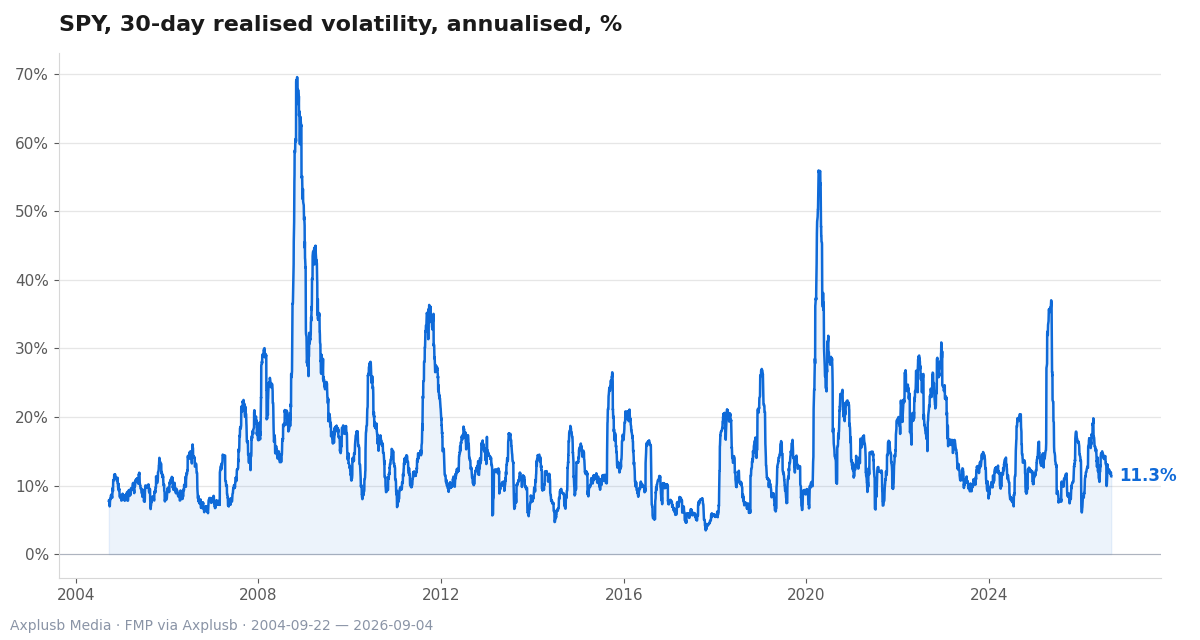
Diversification claims need sober testing. Correlations for bitcoin can swing with regimes. This means diversification benefits are episodic. A risk‑budget approach helps. It binds position size to volatility and draws focus to drawdown control, not just expected return.
Check how disciplined your portfolio really is. A one page risk‑budget snapshot is often enough to reveal drift and hidden concentration.
Operational, security and regulatory risk checklist
Central banks have been explicit about risk. A BIS consultative report lists lifecycle risk frameworks, cyber resilience, and third‑party vendor oversight as required disciplines for CBDC operations. The same categories apply to institutions that will interface with CBDC rails or tokenised instruments.
Privacy and identity are design features, not toggles. The Fed’s CBDC analysis highlights privacy protection and identity verification alongside an intermediated model. Institutions should plan for strong KYC and data‑minimization controls that align with the eventual CBDC standard. They should do this even if the timing of issuance is uncertain.
Translate those principles into a house checklist. Map vendors to control owners, define incident response for on‑chain events, and pre‑agree fallbacks for failed settlements across ledgers. Do not forget auditability and record retention, because regulators will not.
Here is a compact list you can adapt now. Use it as a starting point.
- Governance: name a senior owner for digital assets and CBDC interfaces.
- Lifecycle risk: define controls from onboarding through retirement of wallets and smart contracts.
- Vendor oversight: require SOC‑like evidence and test key‑management procedures regularly.
- Cyber resilience: simulate key compromise and bridge failure scenarios, with backups.
- Compliance: align KYC/AML data handling with a privacy‑preserving, intermediated CBDC model.
Audit your vendors before you add new rails. It beats debugging governance after the fact.
Case studies and empirical evidence to watch
The NBER study is a useful anchor. It estimates that more than seven percent of bitcoin trades serve transactional and cross‑border payment roles based on high‑frequency off‑chain data. That fraction is not the whole story. It pushes against the “purely speculative” trope and points to evolving use cases.
Tokenised liquidity products are already in clients’ hands. Asset managers have built tokenised money‑market funds and liquidity sleeves to give treasurers faster settlement and programmable cash tools. These are not bets on price appreciation; they are workflow bets that live or die on operational reliability.
Allocation frameworks are getting clearer. Institutional research has stepped in with risk‑budget methods that scale exposure to the asset’s volatility and shifting correlations. That language is now common in committee rooms. Committee approval is often the slowest hurdle for any new exposure.
Counterarguments and unresolved trade‑offs
Unified ledgers come with systemic questions, and the BIS warns that governance, interoperability and stability are not side notes but central design challenges. If those fail, the market inherits new points of fragility even as it gains speed and efficiency.
Volatility does not vanish inside a wrapper. The diversification benefits from crypto exposures can be limited in certain regimes because correlations are unstable. Risk‑budget sizing can mitigate that, but it does not change the path risk or the reality of sharp drawdowns.
Interoperability has a cost curve. Standards across ledgers, identity frameworks and messaging protocols require consensus and investment. Institutions will need to carry parallel systems for years. That eats into the very efficiency gains promised by the new rails.
Practical roadmap: a one‑page action plan for institutional investors
Start with governance. Appoint a digital assets sponsor and form a cross‑functional council that includes treasury, risk, compliance and technology. Give it a charter that covers CBDC interfaces, tokenised products and on‑chain custody.
Pilot, then scale. Run a limited tokenised cash sleeve with strict metrics on settlement speed, fail rates and reconciliation friction. Test both an exchange‑traded crypto exposure and a simulated direct‑custody wallet under your own controls, including key procedures and recovery.
Recalibrate the risk budget. Adopt a sizing framework that caps contribution to portfolio volatility and aligns crypto weight with drawdown tolerance. This echoes the one to two percent guidance for investors who can bear it. Document entry and exit rules, and define a review cadence.
Monitor the policy stack. Track CBDC design choices on intermediation, privacy and identity. Update data‑governance standards and service‑level agreements so they can plug into a privacy‑preserving, intermediated CBDC model when it arrives.
Use our deep dives for context as teams ramp up. Start with The Role of Central Bank Digital Currencies in Shaping Future Investment Strategies and pair it with Navigating the Risks of Digital Asset Investments: Strategies for Modern Investors.
Start small, measure everything, and write down the rules before you need them. Follow the plan above.
Related reading
- Understanding Central Bank Digital Currencies: Implications for Investors
- The Future of Payment Systems: How Digital Currencies Are Reshaping Transactions
- The Role of Central Bank Digital Currencies in Shaping Future Investment Strategies
- Navigating the Risks of Digital Asset Investments: Strategies for Modern Investors