Machine learning has not replaced the classic language of factors. It has sharpened it. The practical question is simple: can we raise the predictive power of factor models without losing economic sense or courting model fragility.
What “factor models in the age of AI” means
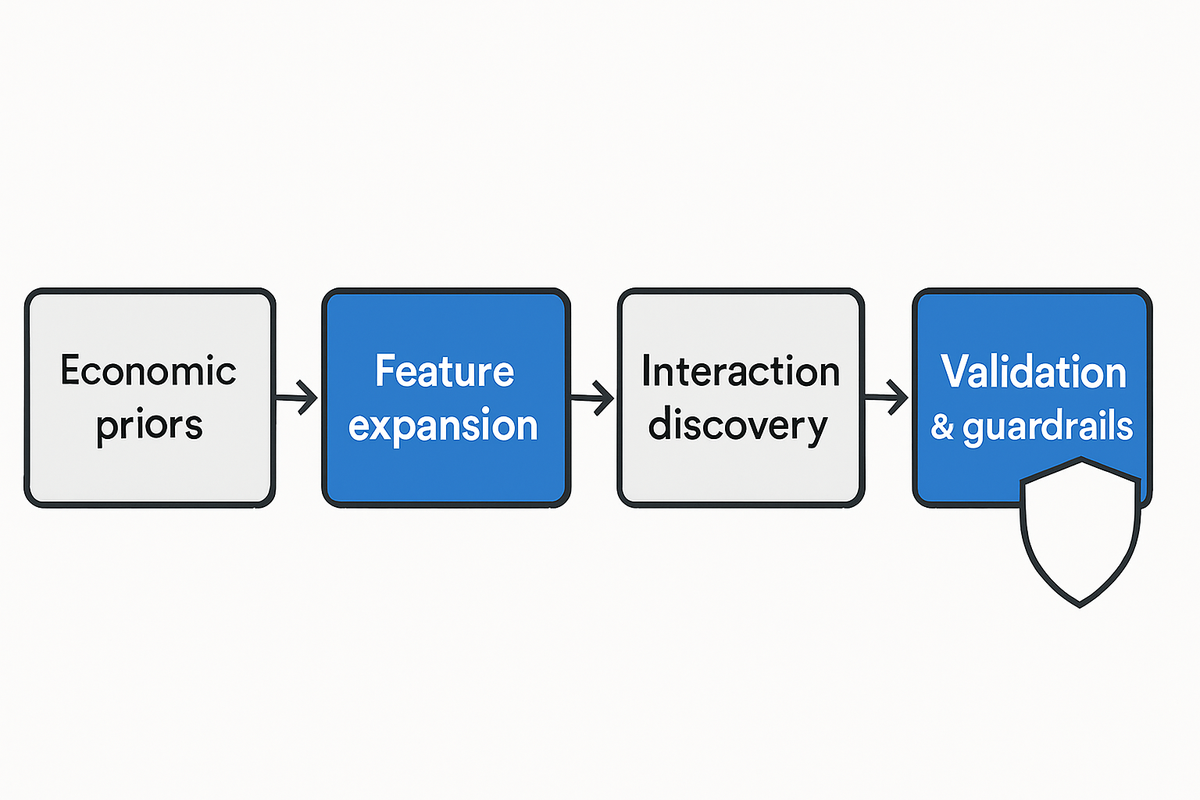
At heart, factor investing starts with market structure. We explain returns with system drivers like value, momentum, quality, size, and risk. Machine learning adds flexible links from many predictors to expected returns and keeps the market anchor.
A broad survey from an institutional team argues that ML should complement, not displace, theory driven models. It also sets out safeguards like cross‑validation and regularisation for noisy financial data. It stresses the need for strict out‑of‑sample tests, as set out in AQR’s Financial Machine Learning survey.
Research has found that non‑linear models can improve out‑of‑sample forecasts of risk premia versus linear baselines. Work also highlights interactions among momentum, liquidity and volatility as strong signals in cross‑sectional stock returns. The practical point is simple and useful. ML often helps most where market signals meet each other.
If you want a refresher on the building blocks, see our overview of systematic returns in Factor Investing Explained: How Quant Funds Beat the Market with Data.
Why the moment is urgent
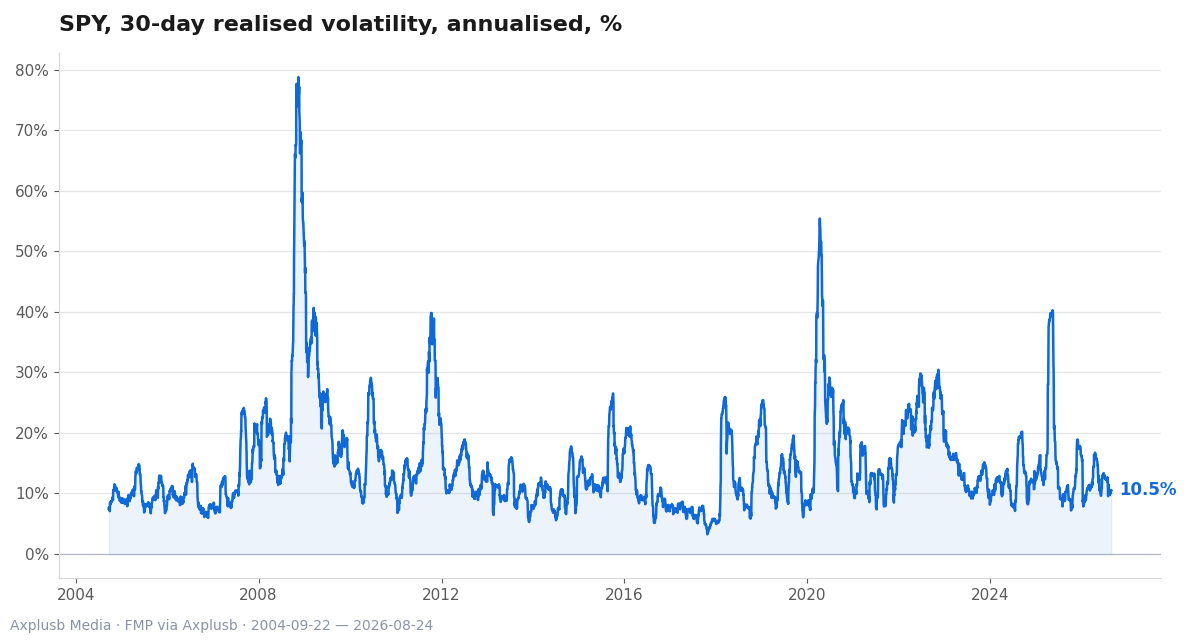
AI has become a top‑down market driver. A recent institutional outlook describes AI as a force that widens dispersion across sectors and firms. That in turn raises the value of selection skill and factor awareness, according to the BlackRock Investment Institute’s 2026 Investment Outlook.
Dispersion is oxygen for factors. It shows who benefits from the theme and who does not. That helps multi‑factor frameworks separate winners from passengers and avoid blunt sector bets.
The business side matters too. Data, tools and governance are not optional extras when models grow complex and adaptive. The case for upgraded toolkits grows with the macro role of AI, but only if investors also lift their process quality.
For a sense of how factor behaviour shifts with regime, see our review of factor performance in today’s markets.
What machine learning practically adds
Machine learning brings three useful things to factor models. First, it finds non‑linear and interaction effects that linear regressions miss. Second, it can use many predictors without handpicking a few favourites. Third, with proper limits, it often fits out‑of‑sample better than simple rules.
A key line of research finds that trees and neural networks raise the accuracy of risk premia forecasts outside the training window. It also shows that momentum, liquidity and volatility interact in ways that matter for stock selection. These are not black‑box curiosities; they are market effects with statistical force.
Practitioners report similar gains when they allow complexity but keep it boxed in with validation and portfolio controls. One case study shows a 50–100% improvement in multi‑factor stock selection versus simple linear models when complex ML models are properly constrained and tested. The caveat is clear. Unconstrained complexity fails fast.
Finally, a disciplined ML process is as much about what you do not let the model learn. The AQR survey stresses cross‑validation, regularisation, and true out‑of‑sample evaluation as core guardrails, not afterthoughts, which aligns with their guidance on mitigating overfitting.
Common misconceptions and overstated promises
The first myth is that ML is an automatic alpha machine. Markets are noisy and adaptive. Without economic priors, an ML model will learn noise and call it pattern.
The second myth is that more data and deeper nets always win. A practitioner guide from a large asset manager warns about overfitting, crowding, leverage, and model brittleness after regime shifts. It stresses manager selection, portfolio‑level diversification and a strong process as the real edge, which is the thrust of J.P. Morgan’s guide to machine learning in hedge funds.
A third myth is that backtests are enough. They are not. Without rolling out‑of‑sample tests and realistic frictions, even honest models can look much better on paper than in live use.
Good governance is not bureaucracy, it is defence. Model reviews, data lineage, and change control help deliver repeatable results in a complex stack. The cost is real, and so is the fragility of an unmanaged process.
Methodological landscape: taming dimension and keeping meaning
Investors face two strong pulls. One is to add factors until the model groans. The other is to retreat to a handful of ratios and hope they survive every regime. The middle path is structure with flexibility.
High‑dimensional methods can help here. Parsimonious latent‑factor approaches can compress the “factor zoo” into a small set of drivers that explain much of the cross‑section. They mix dimension reduction with clear economic sense, and they work well with downstream ML that learns interactions around those cores.
Tree models and neural nets handle non‑linearities and interactions with ease. They need clear regularisation and cross‑validated tuning to avoid chasing noise in sparse panels of financial data. That is why formal validation and realistic portfolio construction steps are part of the method, not a later phase.
Below is a compact map of methods and the safeguards that keep them honest.
| Approach | What it adds | Key safeguards |
|---|---|---|
| Latent/tensor factor models | Parsimonious structure across assets and time | Economic priors, stability checks |
| Trees/forests/boosting | Non-linear splits and interactions | Cross-validation, depth/leaf constraints |
| Neural networks | Flexible function approximation | Regularisation, early stopping, dropout |
| Penalised regressions (L1/L2) | Variable selection and shrinkage | Out-of-sample tuning grids |
| PCA/feature reduction | Noise control and compression | Refit windows, interpretability review |
Signals, interactions and portfolio reality
Remember that signals rarely act alone. Momentum behaves differently when liquidity is tight and volatility is high. ML can capture these joint effects, but the portfolio still needs sensible turnover, capacity checks and risk controls.
Portfolio construction is the last mile. Position limits, transaction cost models and diversification across ML styles stop a good signal from becoming a bad portfolio. This is where research discipline meets market plumbing.
Evidence and case studies
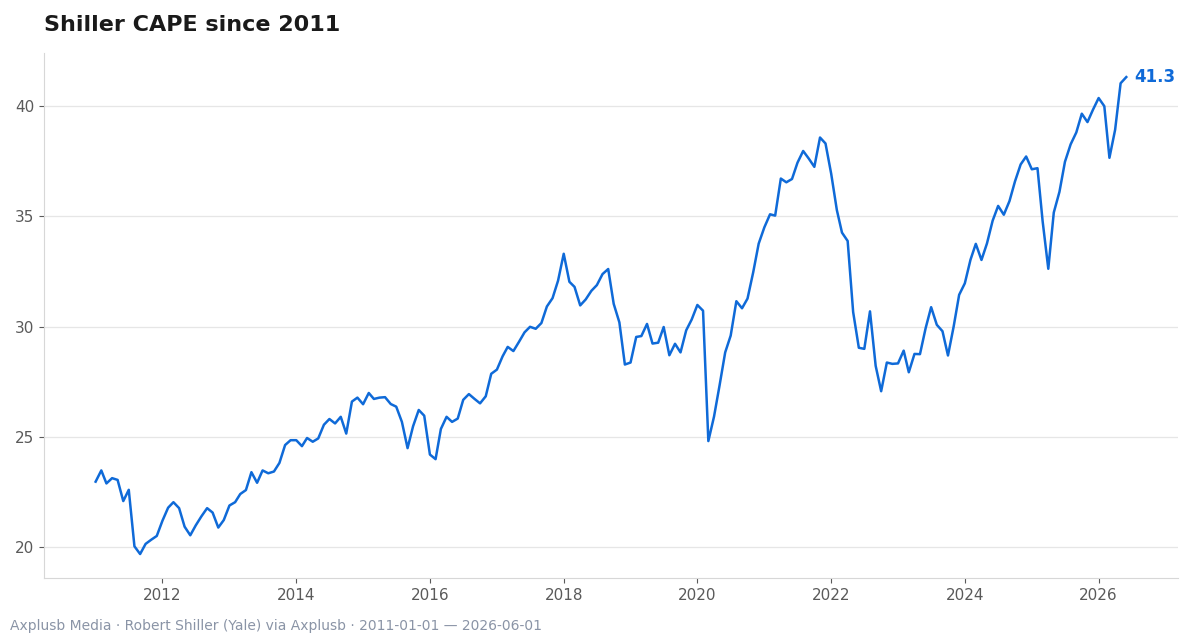
The research record shows that ML methods can lift out‑of‑sample prediction of equity risk premia versus linear models. That includes cases where the best signals are interactions of familiar factors like momentum, liquidity and volatility. The gains are not magic. They come from a blend of structure and flexibility.
On the practitioner side, a detailed case study reports that complex ML stock selection can outperform simple linear factor models by 50–100% when complexity is paired with strong constraints and testing. The phrase used was the “virtue of complexity” within limits, not complexity for its own sake.
Outside equities, central bank work on forecasting offers a useful parallel. Studies of GDP nowcasting show that factor models combined with ML techniques can improve near‑term forecasts when factors are chosen with care and models are tested on fresh data. The lesson transfers well to finance where noise is high.
Context matters too. With AI now a macro driver, institutions expect wider dispersion and fatter tails of winners and laggards. That makes predictive tools and disciplined selection more valuable, in line with BlackRock’s outlook on AI-driven dispersion.
Implementation and operational risks
This is where many strategies fail. The J.P. Morgan practitioner guide lists overfitting, crowding, leverage and exogenous shocks as the core hazards in ML‑led investing. It recommends manager due diligence and diversification across ML styles to avoid one fragile bet, which matches their operational checklist.
Backtesting discipline is non‑negotiable. Use rolling windows, walk‑forward validation, realistic costs and slippage, and avoid look‑ahead bias. Layer portfolio constraints like turnover budgets, capacity limits, and stress tests for regime shifts drawn from known shock periods.
Governance turns models into a repeatable process. Track data lineage, permissioning, model changes, and sign‑off paths. The AQR survey underscores out‑of‑sample evaluation and regularisation as first‑class citizens, not add‑ons, consistent with their recommended safeguards.
– Check how disciplined your portfolio really is. – If you run an external mandate, ask for the validation protocol in writing.
Counterarguments and alternative views
Some argue for parsimony over bigger predictor sets. They prefer latent structures that explain broad variation with fewer factors and offer clearer stories. This approach tames the “factor zoo” and curbs data‑mined signals without a clear reason.
Others point to business costs. Data, compute, and specialist talent are costly. Edges can decay as tools spread and crowds enter the same trades, a risk that the practitioner literature flags alongside capacity limits and leverage controls.
These views are not rejections of ML. They are boundary conditions that shape design choices and market impact. The right reading is not “do less” but “do the right amount, with structure.”
A practical roadmap for investors
Start with economic priors. Define why a factor should pay a premium, then encode signals that proxy that logic. Only then let ML learn the mapping and interactions.
Expand predictors with care. Use penalised regressions, trees or nets, but enforce cross‑validation and regularisation. Keep a strict holdout period, and rerun tests as you add features and time.
Build the portfolio with realism. Include transaction costs, turnover budgets, capacity and crowding checks, and diversify across ML styles. The J.P. Morgan guide is explicit on portfolio‑level diversification and risk controls, which you can see in their practitioner recommendations.
Adopt governance used by large institutions and central banks. Maintain data and model logs, formal review cycles, and scenario tests. With AI a macro driver that raises dispersion, the bar for validation and oversight should rise as well, echoing institutional outlooks on the AI regime.
For a regime lens on factor edges, see our work on inflation-aware factor models.
Conclusion: refining the edge, not replacing the investor
The likely future is hybrid. Machine learning will raise predictive power when joined to market structure and good governance. It will amplify both opportunity and operational risk, so process quality decides who benefits.
We do not need to choose between “factors” and “AI.” We need to choose when complexity adds signal and when it adds noise. The evidence from institutions, researchers and practitioners points to the same rule. Use ML to refine the map, and keep your hands on the wheel.
Related reading
- Factor Investing Explained: How Quant Funds Beat the Market with Data
- Exploring the Evolving Landscape of Factor Models and Their Performance in Today’s Markets
- Enhancing Factor Models for Inflationary Environments: A Quantitative Approach