Tokenisation promises a bigger sandbox for diversification, but only if the plumbing works. The token’s form, the cash you use to settle, and the code you trust shape the outcome. Portfolios must account for new ways to add breadth and new ways to create stress.
What tokenised assets are: a compact taxonomy and why it matters
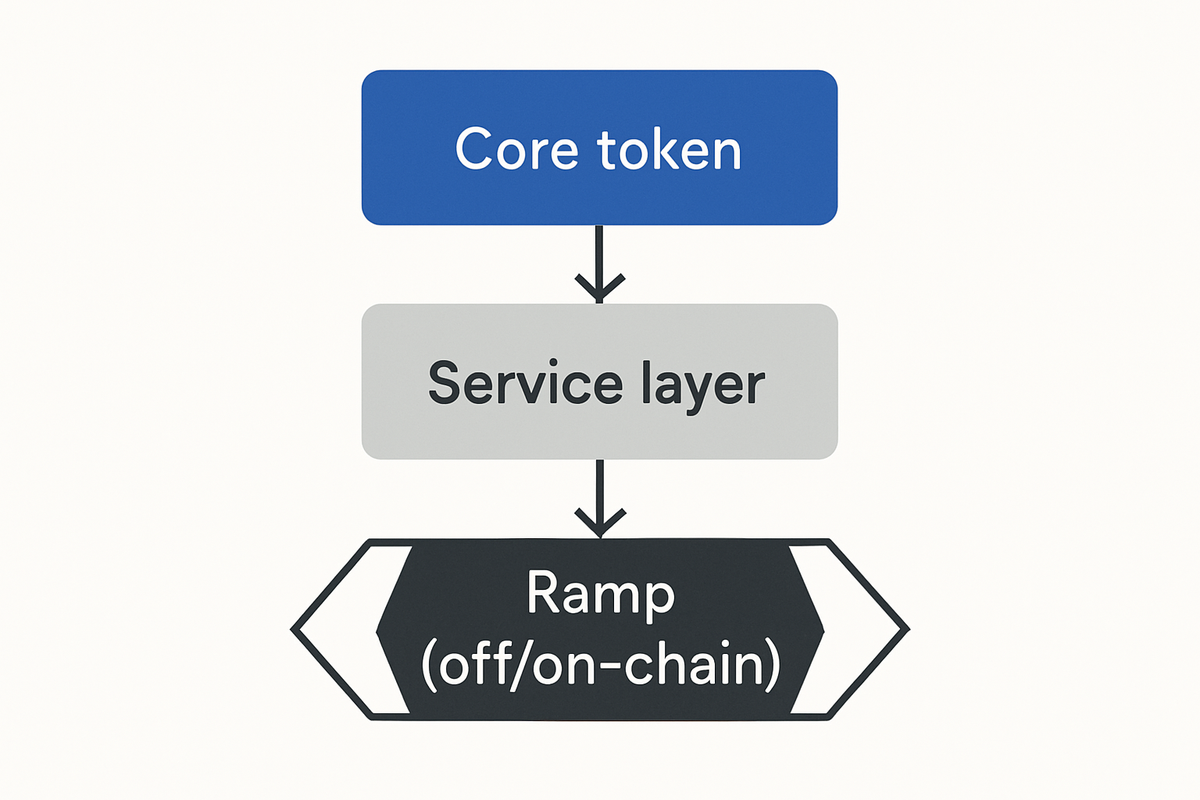
Tokenisation turns claims on assets into programmable tokens and puts them on shared ledgers. The architecture splits into a core token layer and a service layer.
A “ramp” links off‑chain records to on‑chain settlement, as outlined by the BIS Bulletin on the tokenisation continuum.
Programmability lets the token enforce rules, embed transfer logic, and synchronise legs of a trade. Atomic settlement aims to exchange asset and cash in one operation.
That can cut failure risk. Atomic settlement depends on the settlement asset and finality rules.
BlackRock frames tokenisation as an investor tool for fractionalisation and new liquidity pools. That can reshape who can own what and how often they can trade.
That change is not only about speed. It is also about access and control at smaller ticket sizes.
Taxonomy matters for diversification because the layer where a claim “lives” guides its liquidity and risk. It also sets where legal rights sit when things go wrong.
That is what investors actually own and can enforce.
Core tokens, service layers, and ramps
The core token is the cryptographic bearer of the claim and the rules that move it. The service layer wraps the token with identity checks, governance, and market functions.
The service layer covers transfers under specific conditions. The “ramp” bridges off‑chain legal records and on‑chain tokens.
That is the path where many frictions sit. Errors here can create mismatches between what the ledger says and what a court will uphold.
For a scan of product design angles, see our guide to tokenized ownership. That guide discusses how architectures map to investor experience.
Why tokenisation is happening now: the structural drivers
Distribution economics are shifting. J.P. Morgan’s Onyx unit and Bain estimate a $400 billion opportunity in distributing alternative investments to individuals through fractional ownership and lower minimums.
The IMF calls tokenisation a structural change with consequences for settlement assets, market structure, and systemic risk. It stresses the need for legal certainty, governance of code, and international coordination for the shift to be durable.
BlackRock emphasises product innovation and operational considerations. Tokenised funds and programmable features can broaden the menu for retail and institutional investors.
They bring new operational steps to test before scale. That echoes BlackRock’s operational notes.
Unlocking demand depends on costs, user experience, and compliance. The appeal grows when tickets shrink, onboarding eases, and settlement becomes predictable across jurisdictions.
We discuss these portfolio design trade‑offs in our evaluation of tokenized assets in a digital economy.
The technical anatomy that shapes diversification outcomes
Investors must understand where the asset sits, how the cash leg settles, and what the code enforces. The core layer defines the token’s rule set.
The service layer governs identity and access. The ramp aligns off‑chain rights with on‑chain records.
Atomic settlement can reduce settlement risk when both legs synchronise. Yet ESMA flags that moving an asset on chain without on‑chain cash can offer limited commercial advantage.
True finality relies on the cash leg and its legal status. The Federal Reserve’s research overview highlights the key channels for stability and risk.
It points to interconnectedness, settlement risk, and liquidity transformation as core issues. It also notes technology‑neutral supervision and open capital treatment questions for tokenised securities.
See the Federal Reserve Board overview on tokenization and financial stability.
Put simply, plumbing choices shape diversification payoffs. They decide whether a token adds liquid breadth or imports a new bottleneck into the portfolio.
| Plumbing feature | What it enables | Diversification upside | Constraint to watch |
|---|---|---|---|
| Programmability | Embedded rules for transfers and actions | More precise exposure control | Governance of code and upgrade path |
| Fractionalisation | Smaller ticket sizes and shared ownership | Broader access to alternatives | Voting, rights, and servicing at scale |
| Atomic settlement | Synchronous asset and cash exchange | Lower counterparty and fail risk | Finality depends on settlement asset |
| On/off‑chain ramp | Link between legal record and token | Bridge to existing markets | Mismatch risk and legal enforceability |
| Settlement asset | Choice of cash leg design | Faster cycles and matching | Stablecoin/CBDC design and regulation |
Common misconceptions investors bring to tokenised portfolios
Tokenisation does not turn any asset into instant cash. Liquidity still depends on market depth, market makers, and the cash that can settle the trade.
ESMA notes this when it stresses settlement finality and the role of on‑chain cash. Fractionalisation does not erase governance frictions.
Smaller tickets can add scale to corporate actions and voting. Those need clear rules and service processes that BlackRock highlights in its operational notes.
New products do not remove legal uncertainty by default. The IMF underlines the need for legal certainty and clear governance of code.
The Federal Reserve flags open questions on capital treatment for tokenised securities. Regulatory clarity is a diversification input, not a footnote.
If rights and liabilities are unclear across borders, correlations can jump in stress as legal risk becomes the driver.
Three myths to retire
– More tokens equal more liquidity. Liquidity can shift or thin when cash and custody stay off chain.
– Fractions solve access forever. Rights and servicing still need scale tools, and conflicts can rise.
– Code replaces law. Code needs a legal wrapper, and oversight must define who is on the hook.
How tokenised assets change portfolio diversification mechanics and risk channels
Better access is the headline effect. Fractionalised tokens can open alternatives to smaller accounts.
That lets allocators add low‑correlated exposures in measured sizes. The Onyx/Bain work frames this in market terms.
Settlement speed can help risk control. When asset and cash settle in sync, counterparty windows shrink.
That can reduce idiosyncratic blow‑ups and make rebalancing timelier if the cash leg is aligned. Risk channels change as well.
The Federal Reserve flags liquidity transformation and interconnectedness as notable channels. These can spread shocks faster when platforms, assets, and settlement assets link in new ways.
The IMF notes that settlement assets and market structure will shift as tokenisation scales. ESMA adds that finality and stablecoin or CBDC design will shape real liquidity.
This ties the topic to how CBDCs could shape future investment strategies.
Evidence and market signals: market size, product examples and early efficiency claims
The Onyx/Bain estimate of a $400 billion distribution opportunity is the clearest signpost for near‑term scale. It rests on fractional ownership and lower minimums that expand the addressable market for alternative investments.
BlackRock points to tokenised funds and programmable features as the practical front line. It expects new liquidity pools and more tailored wrappers.
It flags operational steps that must be built to support retail‑scale flows. The BIS highlights efficiency gains from programmability and atomic settlement.
It also warns that governance and legal frictions remain. Those could slow the very gains that make the investment case attractive.
ESMA flags fragmentation and operational concentration risks in Europe. It also underscores that moving an asset on chain without on‑chain cash can deliver little commercial advantage.
That is a sober check on hype.
Counterarguments and alternative scenarios for adoption and portfolio impact
Fragmentation across chains and standards could trap liquidity in islands. If the ramps are narrow and bridges unclear, the benefit to diversification can fade as frictions compound.
Regulatory harmonisation can lag product design. The IMF warns that legal certainty and code governance are preconditions.
The Federal Reserve points to supervisory and capital treatment questions that could bind growth. A niche path is plausible if on‑chain cash options stall and cross‑border rules diverge.
A higher‑risk path is also possible if rapid scale arrives without guardrails. That can amplify interconnectedness and liquidity transformation in stress.
In each path, the plumbing sets the range of outcomes. Technology opens doors, while policy and market structure decide how wide they stay.
Practical takeaways — portfolio rules, governance checks and modelling adjustments
Treat tokenised assets like new instruments, not clones of the old. Verify legal title and finality, and read the code governance.
Test operational steps such as mint, burn, transfer, and redemption before sizing an allocation. This echoes BlackRock’s operational view.
Size with behavioural biases in mind. Prospect Theory shows how loss aversion and probability weighting can distort choices.
That can lead investors to overpay for novelty or mistake fractional size for safety in a liquid illusion. Update risk models to reflect speed and links.
The Federal Reserve flags settlement risk and interconnectedness. Models should capture shorter settlement cycles, cash‑leg risks, and new counterparty nodes across service layers.
Refresh governance for the ramp. If off‑chain and on‑chain records can diverge, rehearse the playbook for errors and disputes.
Align vendors on roles and remedies before volume builds.
- Map the settlement asset for every tokenised holding, and record finality rules before trading.
- Cap position sizes for illiquid alternatives despite fractional tickets, and stress rebalancing costs.
- Add legal and operational due diligence to CIO sign‑off, including code audit scope and vendor SLAs.
- Model correlation under funding stress with liquidity transformation as a risk factor.
Check how disciplined your portfolio really is. Test your rebalancing rules before volumes arrive.
Closing synthesis: guarded optimism for diversification, conditional on policy and plumbing
Tokenisation offers real diversification gains through fractional access and programmability. The net benefit relies on legal certainty, interoperable ramps, and clear settlement assets that deliver finality in practice.
The IMF sees a structural shift in market structure and settlement. That makes policy choices central to outcomes.
The BIS points to real efficiency through atomic settlement. ESMA’s focus on cash legs and fragmentation keeps optimism grounded.
The direction is set, but the slope is policy‑driven. Build the portfolio case, keep the guardrails high, and assume the plumbing is part of the asset.
Related reading
- Evaluating Tokenized Assets: Opportunities and Risks in a Digital Economy
- Tokenized Assets: How Blockchain Is Reinventing Ownership of Everything
- The Role of Central Bank Digital Currencies in Shaping Future Investment Strategies