Artificial intelligence in markets evokes two clashing images. One is a cold stack of code that sifts oceans of data for an edge. The other is a fragile model that breaks at the first regime shift. Both are true in parts, and the gap between them is where serious investors now compete.
What “AI in quantitative trading” actually means
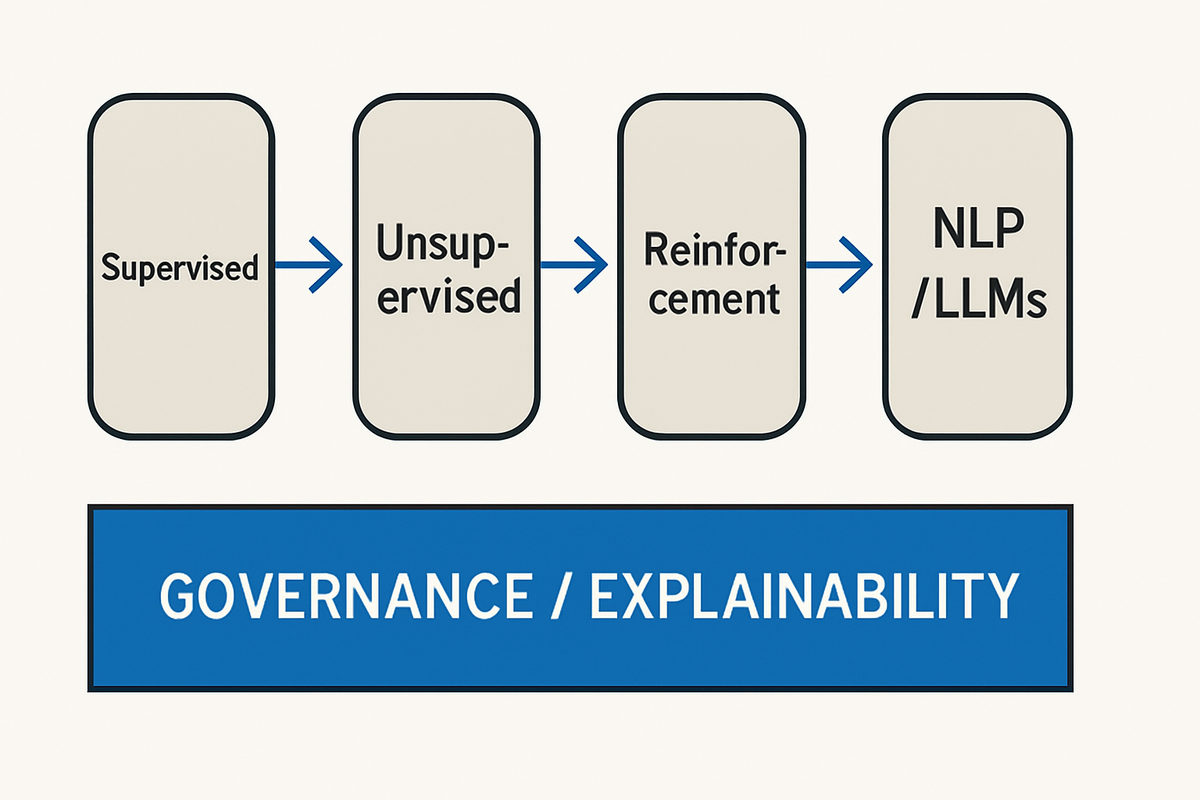
AI in quant trading is a toolbox, not a single model. It covers supervised learning that maps features to future returns, unsupervised methods that find clusters or anomalies, and reinforcement learning that adapts decisions in sequence. It also includes NLP and LLM layers that read text and alternative data at scale. A broad lens matters because the methods interact and market effects show up at the system level.
Supervised models learn from labeled outcomes, such as next month’s returns or realized volatility. That work starts with features built from prices, fundamentals or flows. Labels reflect a clear objective. The details of feature and label design decide whether a model is even testable. Practitioner guides stress this in AQR’s Financial Machine Learning.
Unsupervised tools surface structure without labels. Think of clustering firms by behavior or decomposing return drivers across assets. These methods often shape the research agenda before any forecast is attempted.
Reinforcement learning is different again. It fits settings where the model acts, observes a response, then acts again. Execution and market making are classic use cases. Next‑best action can matter more than a raw prediction in that loop. Roadmaps point to hybrid, knowledge‑driven architectures. These inject rules and domain insight into data‑hungry learners.
Why taxonomy beats buzzwords
A clean map of methods guards against two traps. First, using a predictive model where a control problem is better suited leads to weak results. Second, deploying a language model where a small linear score works adds cost with no benefit. The taxonomy also clarifies where explainability is essential and how it is achieved.
Explainability is not one tool. It ranges from transparent features with economic meaning to post‑hoc attribution and monotonic constraints. Research programs on next‑generation quant stress explainable, automated pipelines because they bridge model craft and control. That bridge matters when signals become crowded and governance standards rise.
Why it matters now — data, compute and a new class of signals
Scale and access have shifted. Text, transcripts and alternative data are now ingested and parsed at industrial speed. Model capacity can turn soft narratives into measurable signals. Industry views describe how LLMs and machine learning expand textual signal extraction and help build theme baskets across sectors and regions. Human plus machine workflows are also framed as a competitive edge because speed alone is not a moat.
The market backdrop has moved too. Regulators and central banks see AI diffusing across intermediation and asset management, with effects that go beyond single funds. A broad survey by the Bank for International Settlements maps those macro and system‑level changes. It also flags risks that scale with adoption.
The result is a change in how teams compete. Data, compute, and workflow design now define the feasible frontier for research. Firms that wire research to production with controls can test faster, fail safer and ship strategies that survive live conditions.
Core techniques and architectures used in quant strategies
The work starts with features and labels. Practitioners warn against clever engineering that has no economic story. They insist on cross‑validation that respects time and market structure. They also say avoid data‑mining through clean splits, proper benchmarks and reality‑checked effect sizes. That advice is set out in AQR’s Financial Machine Learning.
Automation is entering the stack. AutoML frameworks can propose models and hyperparameters, then rank them on out‑of‑sample metrics under guardrails. Roadmaps for “Quant 4.0” point to automated model synthesis, explainable AI, and knowledge‑driven hybrids as the direction of travel. The aim is not a black box. It is a pipeline that can be audited end‑to‑end.
Reinforcement learning comes into its own in execution and trade scheduling. The environment is partly observed, changing, and noisy. That makes robust state design and conservative policies vital. In those areas the reward is often framed as implementation shortfall or slippage, not absolute alpha.
NLP and LLMs extend the signal set. Teams score language in filings and earnings calls, label topics, and map entities over time to track evolving themes. Industry practitioners report that these models enable thematic construction and new portfolio lenses. They still rely on human oversight for sense checks.
| Technique / Architecture | Primary purpose | Key safeguards |
|---|---|---|
| Feature/label engineering | Define learnable problems | Economic intuition, stationarity checks |
| Cross‑validation (time‑aware) | Honest model assessment | Purged/embargoed splits, rolling windows |
| Ensembles/model stacking | Robust prediction | Diversity of learners, out‑of‑sample weighting |
| Reinforcement learning | Execution and control | Conservative rewards, risk limits |
| NLP/LLMs | Textual and alt‑data signals | Domain lexicons, human review |
| Knowledge‑driven hybrids | Stability and interpretability | Constraints, explainability layers |
| AutoML pipelines | Speed and coverage | Audit trails, reproducibility |
Common pitfalls and misconceptions practitioners fall into
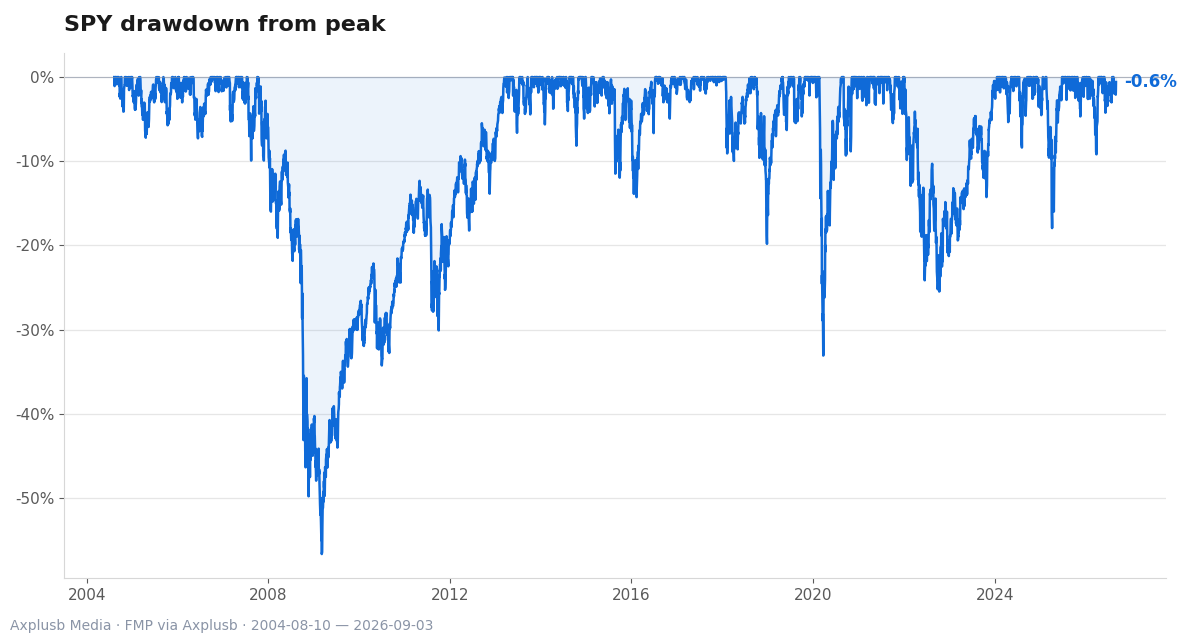
More data does not fix weak design. If labels leak future information or features bundle look‑ahead bias, bigger sets only sharpen the error. Practitioner surveys document data leakage and regime shifts as recurring failure modes. They recommend rigorous backtest hygiene and monitoring to avoid false edges.
Regime change is the quiet killer. Signals built on one market climate can decay fast when liquidity, policy, or crowding shifts. Practical reviews advise regime‑aware validation and stress tests that probe changing behaviour before capital is at risk.
There is also an allure to complexity. A deep model can dazzle with in‑sample fit, yet a simple linear score with solid intuition may hold better out‑of‑sample. This is where disciplined testing pays off. Cross‑sectional and time‑series splits must mirror how the strategy will trade in live.
If you are unsure whether your tests reflect reality, start with stronger backtesting methods. We lay out concrete steps and code paths in Leveraging Machine Learning for Enhanced Backtesting in Quantitative Strategies. When uncertainty rises, pressure‑test assumptions and data windows with the methods in Advanced Backtesting Techniques for Quantitative Strategies in Uncertain Times.
Systemic risks and market‑level consequences: herding, concentration and explainability gaps
When many players run similar models on similar data, crowding builds. The BIS working paper on AI in finance warns about model herding that can amplify tail moves and stress liquidity. This is not a distant worry. It is a known property of adaptive systems that learn from shared signals.
Concentration risk also rises off the trading floor. Compute, cloud and data providers form a narrow stack that many firms rely on. That can be a single point of failure. Policymakers track those links because resilience now includes third‑party dependencies and shared models.
Explainability matters beyond marketing. When models drive capital and risk, supervisors want to know how decisions are made and how they can be challenged. The OECD’s policy review on AI and finance highlights explainability, governance and cross‑border coordination as core policy themes.
Governance responses follow the risk. Model audits, documentation, and validation standards are rising. They shape how research gets shipped. Firms that build explainability into the pipeline can meet both client and regulatory demands without pausing innovation.
Real‑world adoption: practitioner examples and case studies
Adoption is not theoretical. Large asset managers report using ML and LLMs to mine text, build themes, and scale research workflows. They keep human oversight as part of the process. That workflow is as much about infrastructure and data access as it is about model choice.
Public disclosures also signal how tools are integrated. One example is a theme‑focused NLP engine used to inform investment universes and scoring in an advisory context. The disclosure itself matters. It shows the transparency and controls that surround the model’s role in the process.
Case studies from practice note that integration is the hard part. Data governance, versioning and monitoring must be in place for models to add value across teams. When those basics slip, even clever models underdeliver or create operational risk.
For investors outside the largest shops, the lesson is simple. Start with clear use cases where data advantages exist and link model scope to governance maturity. You can add complexity later if the first loop proves robust.
Counterarguments and limits: where AI may not deliver durable edge
Edges decay. Markets adapt, and changing conditions turn a discovered pattern into noise. Reviews of AI practice in quant remind us that many signals are crowded. A short live record can confuse luck for skill. In some domains, simple models with hard economic links still win.
Data is not neutral. Bias in inputs and labels can warp predictions and lead to unfair or unstable outcomes. Policy work underlines the need to test for bias. It also calls for explainability where it affects outcomes that regulators care about.
Cost matters too. Sophisticated models demand compute, data and engineering that smaller teams may not afford. When the cost of research, monitoring and controls is priced in, a leaner setup with tight validation can deliver a better risk‑adjusted result.
Practical toolkit — validation, monitoring and governance checklist for teams
Here is a compact checklist that reflects what works in practice. Use it to structure research and to keep production safe.
- Define features and labels with an economic story, and test stationarity.
- Use time‑aware cross‑validation with purging and embargo to avoid leakage.
- Benchmark against simple, transparent models before adding complexity.
- Run out‑of‑sample and regime‑aware backtests with rolling windows.
- Stress test with synthetic data and perturbations to probe fragility.
- Add explainability layers and monotonic or shape constraints where sensible.
- Monitor live drift, data quality and model performance with alerts.
- Keep a human‑in‑the‑loop for overrides, especially in execution and extremes.
- Document everything: data lineage, parameters, and decision logs.
For deeper implementation detail, see Leveraging Machine Learning for Enhanced Backtesting in Quantitative Strategies. If you face fast‑moving markets, pair that with Advanced Backtesting Techniques for Quantitative Strategies in Uncertain Times for stress design.
The governance items echo policy guidance. The OECD review on AI and finance calls for auditability, model validation and data governance across borders. Building these standards into the research pipeline reduces friction with clients and regulators.
Do not forget the human side of live trading. Behavioral swings can wreck even a well‑tested model when volatility spikes. If your process must withstand stress, revisit the guardrails in The Role of Investor Psychology in Volatile Markets and adapt your dashboard design.
Check how disciplined your portfolio really is. Run one strategy through this list and write down what needs to change this quarter.
Conclusion and forward look — what practitioners and policy makers should watch next
Three forces will shape the field. Technically, expect more automated pipelines, better explainability, and knowledge‑driven hybrids that mix rules with data. Organizationally, the winning shops will pair fast research with scale, monitoring and clear gates to production.
Systemically, oversight will intensify as adoption spreads. The BIS survey of AI in finance points to herding and concentration as live concerns. The OECD review frames governance for stability and cross‑border alignment. Those lenses will guide policy and shape the incentives that model builders face.
The frontier is not a single model, it is a process. Teams that combine economic intuition, careful validation and explainable automation will find edges that last longer. The rest will discover that in markets, clever is easy and robust is rare.
Start small, measure hard, and design for change. That is the path to an AI stack that survives contact with live markets.
Related reading
- Leveraging Machine Learning for Enhanced Backtesting in Quantitative Strategies
- Advanced Backtesting Techniques for Quantitative Strategies in Uncertain Times
- The Role of Investor Psychology in Volatile Markets: Strategies for Resilience