Resilience is not stoicism in a falling market. It is the skill of taking short‑term pain without wrecking long‑term returns. The market sets the tests, but our habits set the score.
Why investor resilience matters now
Resilience is practical, not heroic. It means you can watch values drop, yet avoid trades that lock in losses or miss rebounds. Classic behavioral finance explains why many fail that test.
Shefrin and Statman framed the “disposition effect” four decades ago. Investors tend to sell winners too soon and hold losers too long, a pattern that often flips good intentions into weak results. Aswath Damodaran’s teaching notes add a plain rule of thumb that still bites today. Risk feels larger in a loss, so we grab for control at the worst time.
Market swings have become a feature, not a bug, of the current cycle. That makes resilience a core edge. For a broader map of those dynamics, see the role of investor psychology in volatile markets.
The emotional science — loss aversion quantified
Loss aversion is not just lore. A large meta‑analysis in the Journal of Economic Literature pooled 607 estimates and found a mean loss‑aversion coefficient near 1.95, with a 95% interval around 1.82 to 2.10, showing robust effects across many settings, as detailed in a 2024 JEL meta‑analysis.
What does 1.95 mean in practice. A $1 loss hurts like a $1.95 gain pleases. That gap is large enough to bend trade choices during drawdowns. Even modest red days can feel like a threat to the plan.
Now map that to common decisions. Cutting risk after a drop offers instant relief, yet it often swaps a temporary paper loss for a lasting return gap. The emotion is real, but so is the bill.
Loss aversion also clusters with narrow framing, a focus on each position as a separate win or loss. That mental frame can push investors to chase local relief trades. The portfolio’s long game gets lost.
Complementary drivers: disposition, overconfidence and framing
Loss aversion rarely acts alone. The disposition effect nudges investors to hold losers in hopes of a break even. It also tempts us to sell winners early, which starves the portfolio of compounding.
Overconfidence adds its own spark. Survey evidence from Japan found that overconfident investors were more likely to panic‑sell in market stress, while stronger financial literacy reduced but did not remove the risk, according to a 2025 PLOS ONE study.
Framing is the third lever. How news and portfolio updates present losses or drawdowns can dial panic up or down. Research during the COVID‑19 crisis highlighted that framing effects helped drive rush‑to‑cash waves, and that reframing risk can soften that impulse.
These drivers interact. A sharp loss triggers aversion, a prideful view of one’s timing adds speed, and a bleak headline seals the move. The mix is familiar to anyone who has sold into the hole.
For a deeper primer on those traps in real time, see our framework for decision‑making during corrections.
Why it matters today — the cost of emotional timing
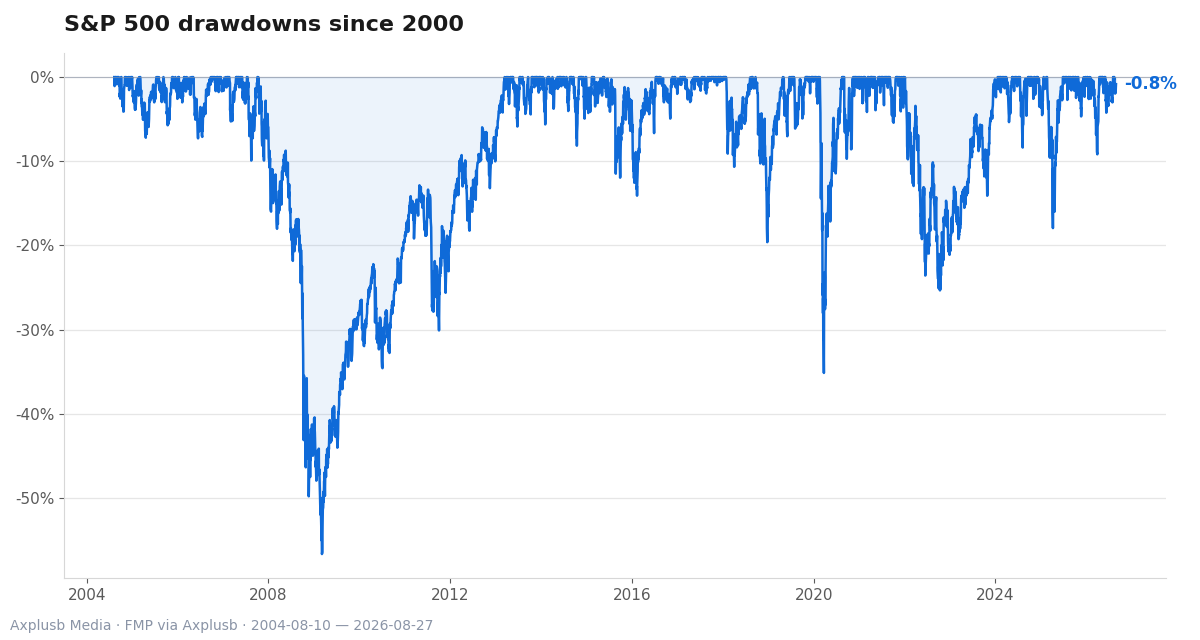
Institutions warn that missing only a handful of strong rebound days can shave a large share off long‑term returns. That evidence sits behind a simple message from BlackRock’s guidance on staying invested through volatility.
Advisors lean on the same logic. They revisit allocations, automate rebalancing and coach clients through stress points. The goal is not to ignore risk, but to avoid panic timing that history keeps punishing.
Volatility keeps offering test cases. A bounce can follow a slump without notice, especially after heavy selling. Selling late in the slide and buying back higher makes the math cruel.
Consider the compounding path. A portfolio that stays invested, rebalances, and holds a simple discipline often tracks its goal despite noise. A portfolio that chases relief trades drifts, then pays again to get back on plan.
For a related lens on cycle mood swings, see our piece on investor sentiment and market cycles.
Common misconceptions and their consequences
Misconception one: “Financial literacy fixes panic.” Education helps, but it does not end panic selling. The Japanese survey linked higher literacy to lower panic‑sale risk, yet overconfidence still raised the odds, as shown in the PLOS ONE evidence from 2025.
Misconception two: “Stay invested is a blanket rule.” The message is a guide, not a script. It rests on clear reasons, like the cost of missing rebound days, which institutions highlight, yet it still assumes a suitable plan and a cash buffer.
Misconception three: “Tough talk builds tolerance.” Berating fear rarely works. Framing and calm context tend to do better. Changing how we present red days can reduce stress without hiding risk.
A final myth: “We can time our way around pain.” The record is filled with failed exits and late re‑entries. Even pros struggle to time swings well. That is why many build rules that lower the need to guess.
Empirical case notes — the anchors to remember
Numbers and mechanisms help when the screen turns red. Here are the pillars that matter most.
| Pillar | Source | Core finding | Practical note |
|---|---|---|---|
| Loss aversion size | JEL 2024 meta-analysis | Mean coefficient ≈ 1.95; 95% interval ~1.82–2.10 | Expect losses to feel about twice as strong as gains. |
| Overconfidence and panic sales | PLOS ONE 2025 | Overconfidence raises panic-selling risk; literacy helps but does not remove it | Coach confidence, but add process guardrails. |
| Framing effects in crises | Risks (MDPI) 2024 | How information is framed can drive or soften panic selling | Reframe drawdowns with context and clear horizons. |
| Cost of missing rebound days | BlackRock Insights 2026 | Missing a few strong days reduces long-run returns | Use stay-invested rules and systematic re-entries. |
| Advisor playbook today | Morningstar 2026 | Rebalance, educate, and use process to avoid emotional timing | Build checklists with cooling-off and review points. |
These items do not compete. They fit. The math explains the feeling, the surveys explain the triggers, the framing shows the lever, and the practitioner notes show the cure.
Use them as a kit. When a drawdown hits, read down the list and decide which lever you need. Then act once, not ten times.
Check how disciplined your portfolio really is.
A communication playbook for advisors and self‑directed investors
Start with framing. Lead with time horizon, then context the drawdown against history, and only then show point losses. Research on crisis framing found that better frames dampen panic without hiding facts.
Pair framing with one or two process rules. Institutions stress staying invested, broad diversification, and scheduled rebalancing for a reason. That triad lowers the need to time swings and keeps cash where it belongs.
Tie messages to goals. A retirement plan or college fund has dates and ranges, not a single quarter’s return target. A note that restates that link can cool a hot impulse better than a chart alone.
Coach overconfidence gently. The survey evidence tied pride in timing to panic exits. Invite a pause, then run a simple base‑rate check. A two‑line script can do the job in a tense call.
The practice — interventions that build resilience
Cooling‑off rules help. Add a 24 to 72 hour delay before any sell after a drop. The pause creates space for a second check and a reframe.
Use precommitments. Decide in calm times how you will rebalance, when you will add, and when you will sit still. Write the rule, sign it, and store it where you trade.
Automate what you can. Set alerts tied to portfolio weights and risk bands, not to price headlines. Automation reduces the number of in‑the‑moment choices that emotions can hijack.
Lean on simple education that admits its limits. Basic literacy helps, yet it does not grant a panic‑proof mind. Blend short lessons with process and framing, the way advisors already do.
A compact checklist for the next drawdown
The following list is meant to be used, not admired. Print it, share it, and test it.
- Define your red‑day rule: one action, then wait 48 hours before any follow‑up.
- Rebalance by schedule or band; use alerts on weight drift, not on price moves.
- Prewrite a buy‑the‑dip plan sized to your risk budget, and cap daily adds.
- Anchor every update to your time horizon and funding goal before showing losses.
- Use one page to restate your base case and a second page for plausible risks.
- Run a base‑rate check: How often have exits helped you in past drawdowns.
- Record three recent false alarms to balance one fresh fear.
- Set two small wins you control this week: contribution, fee cut, or a smart rebalance.
- If you feel “sure” about timing, wait a day, then ask what would change your mind.
- Close the loop: after the drawdown, review your rule and refine one line.
Save this checklist for your next drawdown.
Case examples: applying the kit
A client calls after a 7% slide in a week. You start with horizon, then show that such moves recur. You remind them of the rebalancing rule and schedule one add, then set a two‑day follow‑up.
A self‑directed saver sees three scary headlines. She opens her one‑page plan, notes the goal is a 20‑year fund, and logs a small add from cash as preplanned. The base‑rate check stops a second trade.
An overconfident trader wants to dump a lagging fund. You ask for a 24 hour hold and present its role in diversification. The next day the urge is lower, and the rebalance stays on plan.
An advisor team updates client letters. They lead with time frames, provide drawdown context, and link to stay‑invested rules. Fewer calls come in, and more clients stick with the schedule.
Limits, counterarguments and a forward agenda
No single tool is a silver bullet. The loss‑aversion gap is robust, and the surveys and crisis studies show added levers. Yet literacy alone leaves pockets of risk, and process without framing still leaks.
The cost of missing rebounds supports stay‑invested bias. That does not mean never sell. It means that sells should tie to plan and risk, not to fear. A rebalance out is very different from a panic exit.
We should be candid about precision. The JEL meta‑estimate gives a sturdy mean for loss aversion. It does not tell you how you will feel on Friday afternoon. That is why we build rules.
The agenda is simple. Keep testing frames that calm without sugarcoating. Blend education with automation and precommitment. And measure what works across clients and cycles, not just in one storm.
Putting it all together
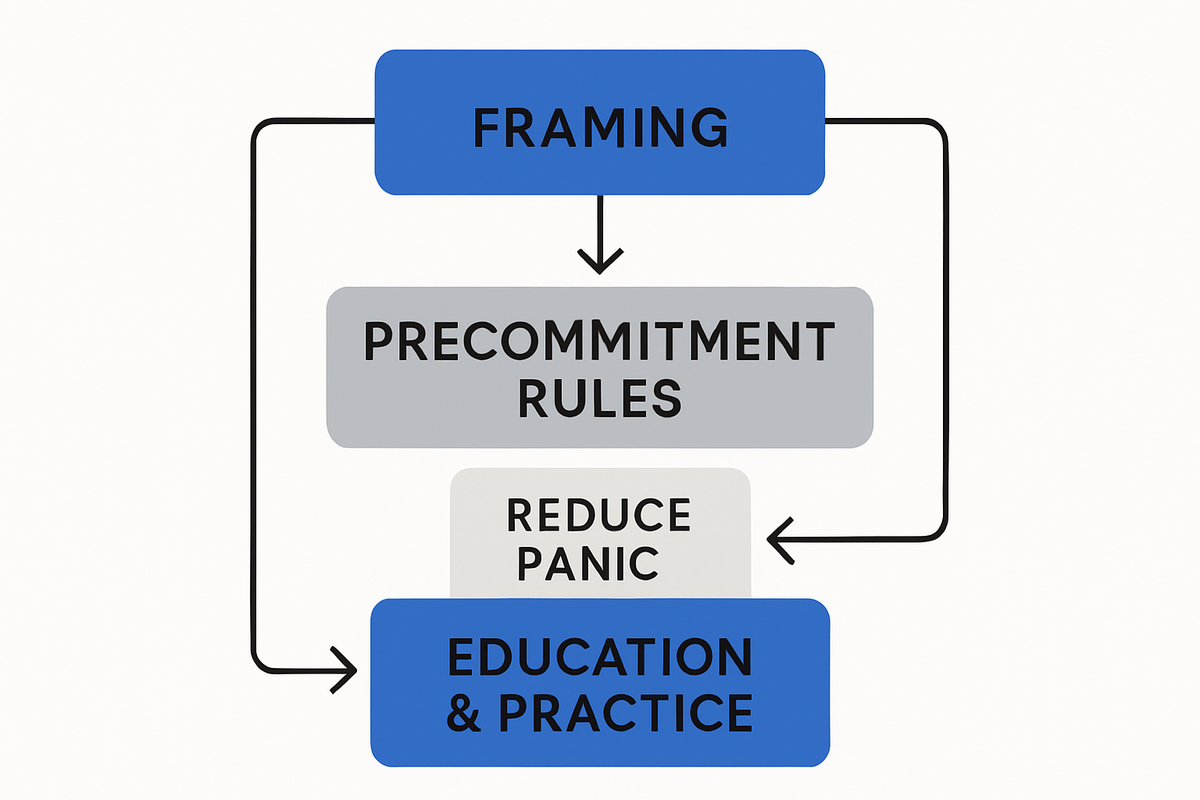
Resilience is a practiced skill. You will still feel losses more than gains, by a lot, as the JEL evidence shows in numbers. But feelings do not have to drive the trade.
Combine three levers. Use framing to cool the first impulse. Use rules to limit in‑the‑moment choices. Then use education to explain why these habits work, even when the screen is red.
None of this is mystical. It is a set of moves you can write down and repeat. Start small, keep score, and refine. The edge builds from there.
In a drawdown, the question is not “How do I avoid pain.” It is “How do I avoid turning pain into damage.” That is the work of resilience.
Related reading
- The Role of Investor Psychology in Volatile Markets: Strategies for Resilience
- Understanding Cognitive Biases during Market Corrections: A Framework for Decision‑Making
- Investor Sentiment: How Emotions Drive Market Cycles