Volatility makes even seasoned investors second‑guess themselves. Prices swing, headlines shout, and the urge to do something grows louder than any plan set in calmer times. Psychological resilience is the quiet skill that keeps action aligned with purpose when the screen turns red.
It is not stoicism. It is a set of habits and guardrails that help you keep the long game in view when emotion pulls you to the short term. Call it disciplined follow‑through under stress.
What resilience and discipline mean for investors
In practice, resilience is the ability to stick to a sound process when markets are noisy. Behavioral finance has shown that sentiment and bias can push prices around, especially in assets that are hard to value and difficult to arbitrage, which is why discipline is designed not guessed.
On the practitioner side, long‑horizon managers frame resilience as staying invested, filtering noise, and holding diversified, durable portfolios. That view is a steady theme in BlackRock guidance on navigating volatility.
Discipline is not a rigid script. It is a decision architecture that narrows room for error at the worst possible time.
For a tour of the feelings that drive those errors, see our piece on fear and greed in volatile markets.
Why this matters now
Volatility is not only a price pattern. It is a stress amplifier that tests preferences and patience. During the pandemic, shifts in perceived risk were large and fast, and they helped drive both the crash and the rebound.
A crisis compresses time. Sentiment changes in days, and portfolios are forced to live with that pace. It is exactly when investors need rules that slow the hands while keeping eyes on the plan.
Professional playbooks agree that resilience takes structure. That means scenario planning, pressure‑testing, and building the capabilities that can withstand shocks, themes echoed in management guidance on operating through volatile eras.
It also means simple hygiene for investors: mute the noise that does not matter and revisit the basics of diversification. That is the tone you see in staying‑invested playbooks from BlackRock.
The behavioral anatomy of undisciplined trading
Most reactive trades have a human root. A few predictable biases do much of the damage.
– Loss aversion makes losses feel larger than equal gains, so investors cut winners too soon and hold losers too long. – The disposition effect formalizes that pattern, a pitfall that industry guides flag as common and costly. – Recency bias, including myopic loss aversion, gives too much weight to what just happened, which turns streaks into emotional trials. – Overconfidence tells you that this time your hunch is exceptional, and that the market will reward your speed.
These tendencies interact with return patterns. AQR has described how “streaky” return streams can be harder to hold, even when they offer better long‑run risk‑adjusted profiles, because the path is emotionally choppy. The strategy is fine on paper, but conviction is scarce in drawdowns.
Industry evidence also shows that performance chasing compounds the problem. As investors move from one hot area to the next, they often buy late and sell early, exacting a quiet toll on wealth over time, a dynamic discussed in J.P. Morgan’s analysis of staying invested.
If you want a deeper dive into coping with those emotions, explore our guide to managing emotions in downturns.
| Bias or pattern | What it tends to cause | Practical countermeasure |
|---|---|---|
| Loss aversion | Selling winners early, holding losers longer | Pre-set exit rules; review winners and losers by thesis, not P&L |
| Disposition effect | Delayed loss recognition | Use stop-loss or thesis-stop notes; automate rebalancing |
| Recency bias | Over-weighting recent returns | Look at longer lookbacks; use checklists before trades |
| Overconfidence | Excess trading, concentrated bets | Position limits; second-reader sign-off; base-rate prompts |
| “Streaky” returns pain | Abandoning strategies mid-drawdown | Precommit to minimum holding periods; plan drawdown ranges |
How beliefs and sentiment turn volatility into trading spikes
When people disagree more about what comes next, they trade more. Evidence from the Board of Governors of the Federal Reserve System shows that dispersion in household beliefs is linked to higher trading volume, suggesting that retail flows move with shifting beliefs rather than pure random noise, as documented in the FEDS paper on household investors and belief dispersion.
That mechanism matters in volatile weeks. News and social feeds raise belief dispersion, and volume responds. Price swings then feed back into beliefs, which keeps the loop running.
Pandemic‑era experience adds a sentiment layer. Changes in perceived risk, visible even in internet search behavior, explained part of the crash and the rebound. Risk attitude was not a mood on the side, it showed up in market prices.
The practical read is simple. Managing beliefs under pressure is part of risk management. If your rules absorb the first impulse, you lower the odds that a belief spike turns into a trading mistake.
The measurable cost of losing discipline
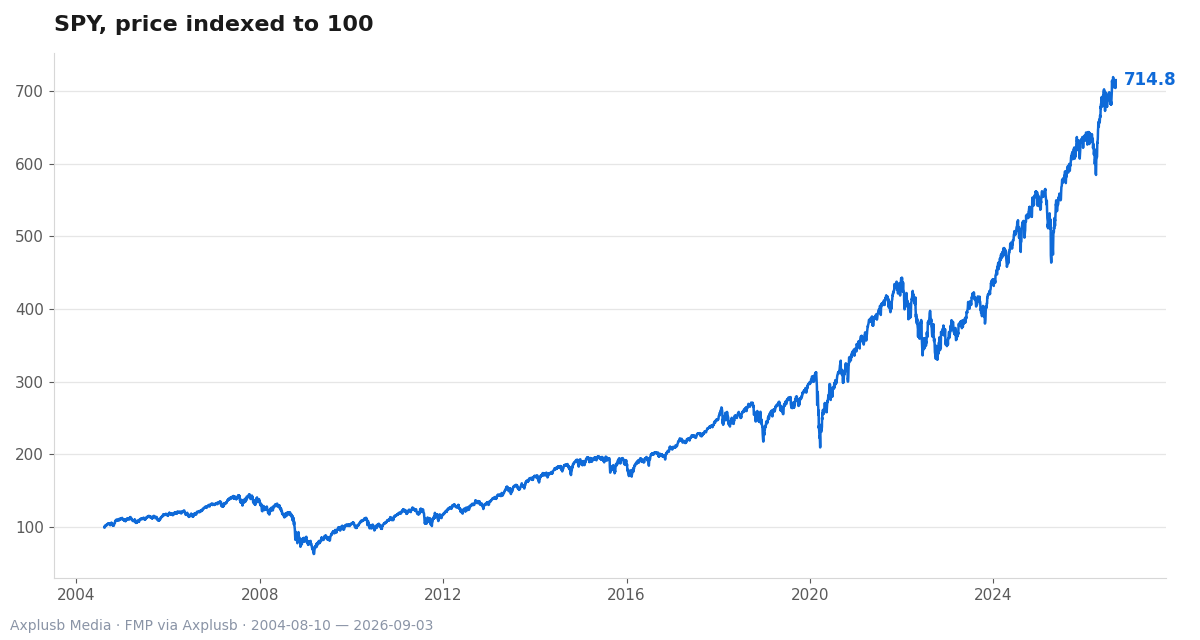
The industry has spent years tallying the cost of mistimed action. One recurring result is that missing a handful of the best days can dent long‑run returns in ways that feel disproportionate to the number of days missed, a point quantified in J.P. Morgan’s Staying Invested report.
On the flip side, practitioner histories show that staying invested through volatile periods tends to beat reactive selling over time. The message is not “do nothing” forever, it is “avoid emotional exits that break compounding,” a line you will find echoed in BlackRock’s volatility guidance.
There is also a quieter, longer‑run cost. Strategies with uneven or streaky return paths can carry a premium, yet they are abandoned most often for path‑related reasons. If you cannot accept the path, you will likely miss the payoff.
Gamified platforms and social media can make the discipline gap wider. J.P. Morgan discusses how these channels amplify reactions and encourage performance chasing, which raises turnover without necessarily improving outcomes.
Common misconceptions and clear replies
“Timing works if you are good at it.” This is true by definition, and still not useful as policy. The hurdle is that you must get many judgments right across long spans of time while avoiding the worst days to miss, which industry analysis shows is hard and expensive when you are wrong.
“Retail flows are noise, they do not matter.” Evidence on household investors indicates that dispersed beliefs help drive volume, which affects prices and liquidity. That is not irrelevant, and it is not uniformly random.
“Volatility equals permanent risk.” It can, but not always. Volatility is sometimes a path tax that you pay to harvest a return stream, and resilience is how you avoid mistaking that tax for a broken thesis.
“Discipline is passivity.” Not so. Discipline is a system that defines what you do and what you will not do, and it earns its keep in storms.
A practical toolkit for investor resilience
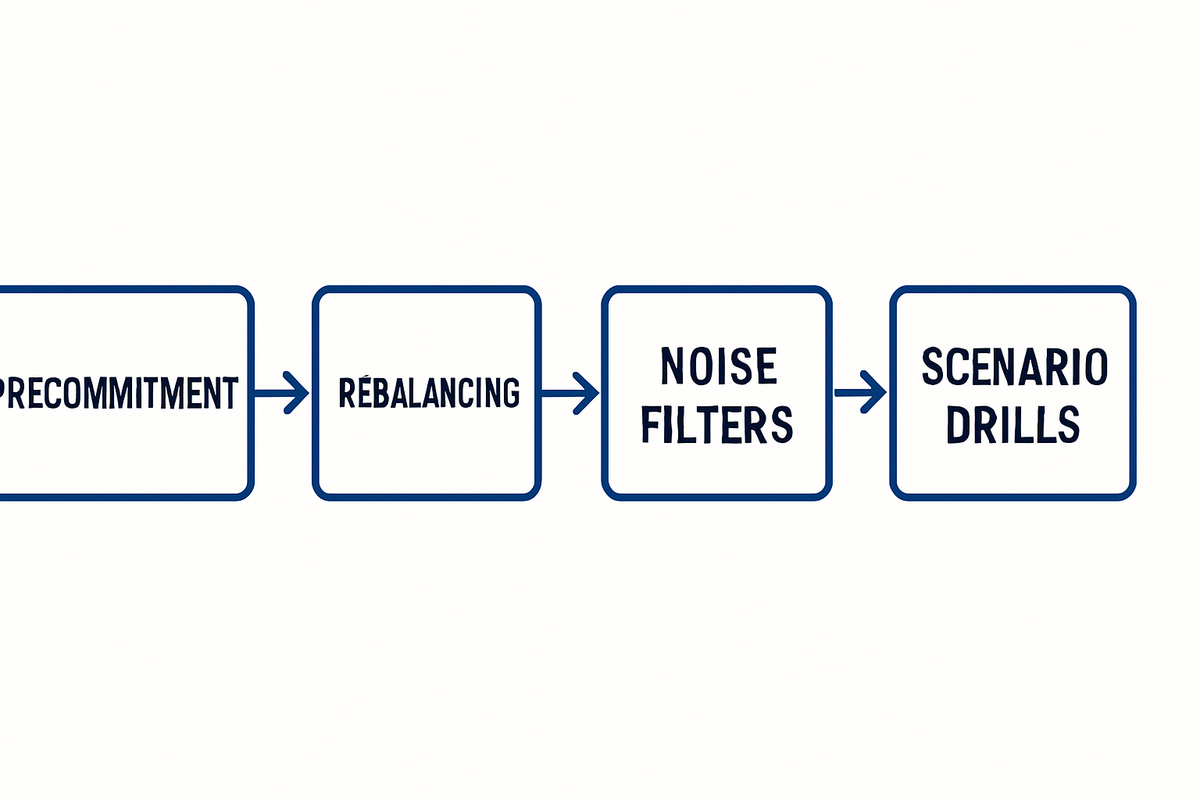
Engineering resilience starts with precommitment. Decide the actions you will take in stress before stress arrives, and write them down. A checklist is a small tool with a large impact.
Next, build in rebalancing discipline. If you have a target mix, set calendar or threshold rules that move you toward it, not away from it, when prices swing. This is boring and effective.
Filter noise. Reduce the number of alerts, mute social spikes, and narrow your information diet to sources aligned with your process. BlackRock’s guidance places that filter next to diversification and a resilient core portfolio.
Finally, plan scenarios and pressure‑test your risk tolerance. Play through drawdowns and fast recoveries, and write the triggers that would cause a genuine change in plan. This is the investor’s version of the systems‑oriented planning used to operate through shocks.
Check how disciplined your portfolio really is.
Concrete rule examples
– Precommit to a rebalancing cadence, and automate it where possible. – Set a one‑page sell discipline that relies on thesis breaks, not price moves. – Use a “cool‑down” timer before any reactive trade, and a second‑reader sign‑off for large changes. – Limit inputs: mute social feeds during swings; rely on periodic, curated updates aligned with your plan. – Codify a minimum holding period for any strategy with streaky returns, with an allowed drawdown range. – Use base‑rate prompts before any forecast: what happens most of the time, and what is your edge.
Several of these ideas align with the stay‑invested, noise‑filtering approach in BlackRock’s volatility notes and the behavior‑aware caution in J.P. Morgan’s guidance on timing pitfalls.
If you prefer a rules‑based lens, our exploration of the link between risk and return paths in the volatility paradox essay may help you set thresholds that you can live with.
Evidence roundup
– Belief dispersion and trading: a Federal Reserve study links household belief differences with higher trading volume, showing that retail flows respond to changing beliefs rather than random noise. – Risk attitude in crises: a pandemic‑era index based on internet searches showed that shifts in perceived risk helped explain both the crash and the fast rebound. – Discipline and timing: industry analyses document the cost of missing a small number of best days and the prevalence of performance chasing and the disposition effect among retail investors. – Staying invested: practitioner histories emphasize filtering noise, focusing on fundamentals, and maintaining diversified, resilient portfolios during volatile stretches. – Streaky returns: research on emotionally hard paths suggests that patience and conviction are prerequisites to capturing the full premium.
Conclusion: tempered conviction in an age of noise
Resilience is not a slogan. It is the work of designing a stance that holds when the urge to react is strongest.
That stance blends precommitment, clear rebalancing rules, noise filters, and scenario practice. It respects how beliefs shift and how sentiment moves prices, and it builds enough slack to keep compounding intact when the path is rough.
History and industry guidance both point the same way. Stay invested with a resilient core, avoid emotional exits, and manage the human system that makes the decisions. Tempered conviction beats improvised courage.
If you want to see where your plan might bend, run a drill this week.
Related reading
- Behavioral Insights: How Fear and Greed Drive Market Decisions Amidst Volatility
- Cultivating Investor Resilience: Managing Emotions During Market Downturns
- The Volatility Paradox: Why Low-Risk Portfolios Outperform Over the Long Run