Inflation is not only a number that shows up in a monthly release. It is a story we tell ourselves about the future value of money.
That story moves portfolios when prices rise. Expectations shift, risk appetites wobble, and the same data point can spark opposite trades.
The systemic stakes are real. If high inflation lingers, it can shape a durable “inflation psychology” that pulls expectations off anchor and feeds back into prices. That point is argued in the Bank for International Settlements’ 2024 report on expectations anchoring the BIS Annual Economic Report 2024 chapter on inflation psychology and expectations.
Why investor psychology is central to inflation’s market story
Markets move when people update beliefs. Inflation changes those beliefs in ways that are uneven across investors and across time. The same rise in prices can look like a hedgeable risk to one person and a real loss to another.
A recent study using detailed trading data shows investors do not respond to inflation in a single way. Some buy, consistent with hedging motives. Others sell in response to perceived real losses and money illusion.
The authors also find that investor skill helps cut these errors and leads to more measured actions. If expectations are well anchored, inflation shocks might pass through with less lasting market damage. When they are not, the risk is a loop: expectations push prices, and prices confirm expectations.
This is why investor psychology belongs at the center of the inflation debate. It is not decoration on the macro story. It is a core driver of how that story shows up in prices and portfolios.
A note on cycles and fear
Inflation often arrives alongside other stressors. That mix can amplify errors and create herd behavior.
For the psychology of stress markets, see our field guide on The Psychology of Bear Markets: Navigating Investor Behavior in Tough Times.
The behavioural mechanisms: how inflation changes minds and trades
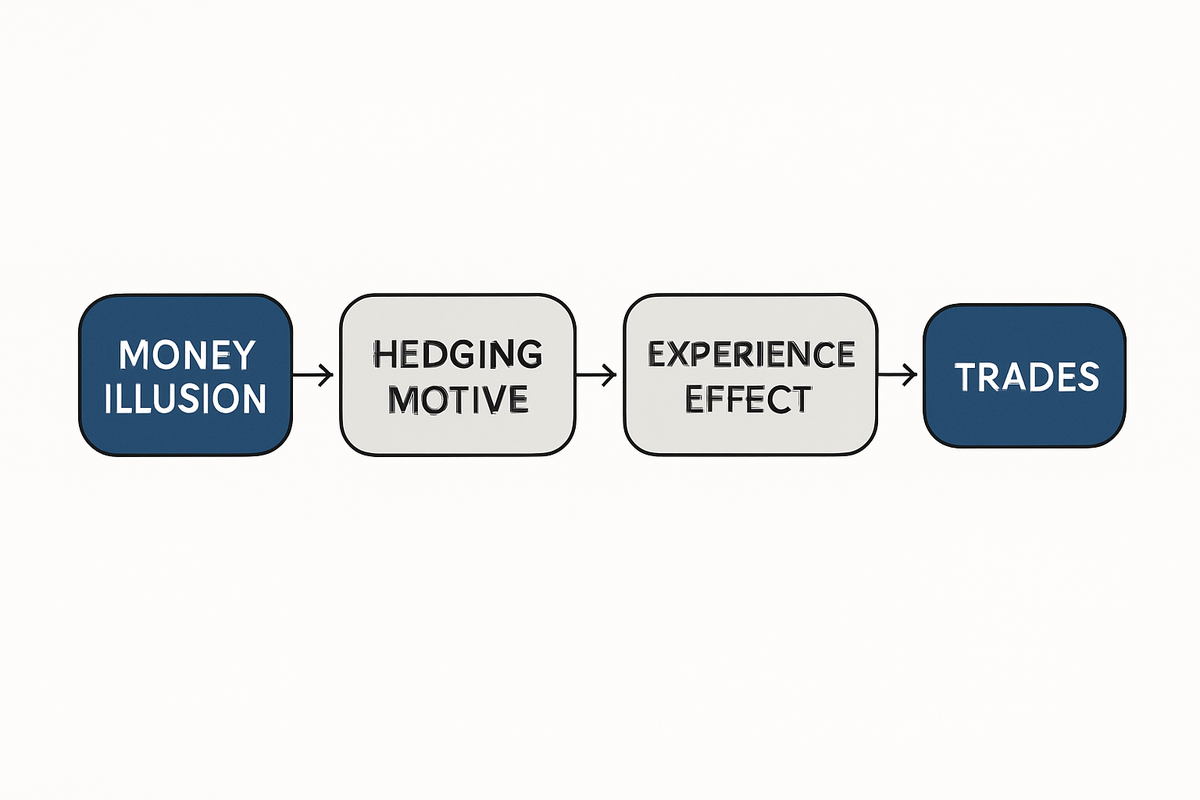
Four mechanisms explain much of the action. They often overlap inside the same decision. This overlap is why identical macro prints can cause divergent trades.
Money illusion and perceived real losses push some investors to treat nominal declines as real. That perception raises loss aversion and can trigger selling. By contrast, hedging motives lead other investors to rotate toward assets they believe will keep up with prices, such as equities with pricing power or explicit inflation hedges.
Attention magnifies all of it. When investor attention is high, markets react more to inflation news.
During the 2021 to 2023 surge, Consumer Price Index releases produced outsized reactions. Periods of higher pre‑announcement attention saw stronger moves and occasional overreaction. See the Federal Reserve’s study of attention and CPI announcements the Federal Reserve’s study of attention and CPI announcements.
Experience effects shape beliefs too. Investors who have lived through high inflation can over‑weight those memories when forming expectations.
Academic work on inflation expectations shows subjective beliefs differ across groups and that these beliefs spill into consumption and portfolio choices. Upward biases for some groups are well documented and help explain persistent dispersion in inflation views.
The upshot is a tapestry of motives, frames, and heuristics. Variation in trading is not noise around a single mean response. It is the mechanism.
A quick map of channels and evidence
| Mechanism | What it feels like | Typical trade pattern | Evidence touchpoint |
|---|---|---|---|
| Money illusion / real-loss framing | “My cash buys less, I am losing now” | Sell risky assets, seek nominal certainty | Investor heterogeneity and bias mitigation by sophistication in RFS 2023 |
| Hedging motive | “I want assets that move with prices” | Buy equities with pricing power, consider inflation hedges | RFS 2023 notes buy-side responses consistent with hedging |
| Attention-driven overreaction | “This CPI print will move everything” | Pre-positioning, sharp post-release moves | Fed study links attention to larger reactions in 2021–23 |
| Experience effects | “I remember inflation, it lingers” | Persistent defensive tilts or higher inflation forecasts | NBER research on expectations and heterogeneity |
If you want a deeper tour of classic traps in this setting, our primer on Understanding Behavioral Traps during Inflationary Periods lays out the core biases. It uses case vignettes.
Why it matters now: the persistence problem and market sensitivity
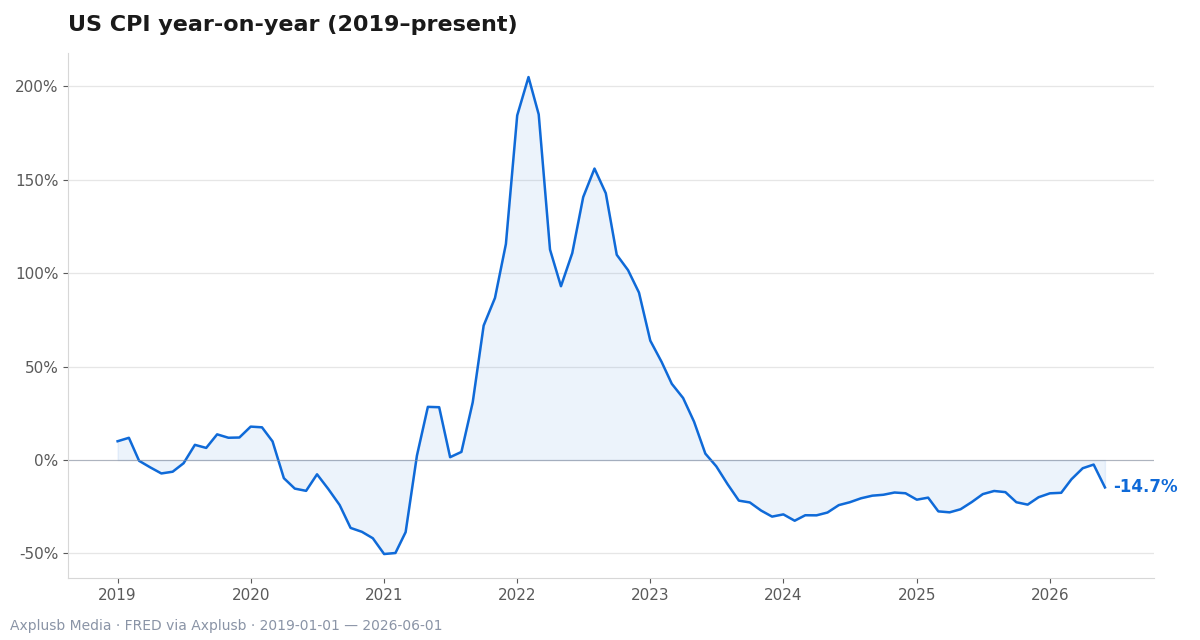
A short burst of inflation can be absorbed. A protracted regime is different. It raises the odds that expectations drift and then get stuck in the wrong place. That is the “entrenchment” risk policy makers worry about.
The BIS warns that extended high inflation can seed a self‑reinforcing “inflation psychology” if expectations lose their anchor. That can complicate the path back to price stability. That is the macro layer that hangs over every trade.
At the micro layer sits attention and sensitivity. During the recent inflation run‑up, CPI releases drew intense focus and delivered larger market moves.
There were periods where attention set the stage for overreaction. That is not just about headlines. It is about the market’s wiring when inflation feels like the only story that matters.
The challenge is coordination. Policy must speak clearly to preserve anchors. Investors must build governance that prevents attention waves from becoming strategy drift.
Common misconceptions and behavioural traps investors fall into
Three erroneous beliefs recur in inflation episodes. Each has a behavioral root and each is costly.
– “Cash is a safe haven.” Cash buffers are vital for near‑term needs, but sitting fully in cash when inflation is high lets purchasing power erode. Guidance from a large retail and asset manager advises against all‑cash postures during inflation and stresses time‑horizon alignment and disciplined rebalancing.
– “Everyone reacts the same way.” The trading data say otherwise. Some investors buy on inflation news, others sell, and skill reduces the odds of a money‑illusion response.
– “A 60/40 portfolio always diversifies inflation risk.” Historical research documents episodes when stocks and bonds fall together during inflation shocks. That undercuts the usual ballast and has clear implications for risk budgets and hedging.
Many of these errors start as reasonable instincts that get pushed too far. Defensive turns into paralysis. Discipline turns into rigidity. Forewarned is forearmed.
A checklist for your own bias audit
– Are you selling because of a real cash flow need or because of a nominal loss frame?
– Does your hedge reflect evidence about pricing power and inflation betas, or a recent headline?
– If bonds and stocks both fall, do you have a rule for rebalancing or a plan to de‑risk?
For a broader toolkit to measure crowd mood when attention is high, see our guide to Market Sentiment Analysis. It offers methods to read market mood.
Evidence trench: what the data and case studies actually show
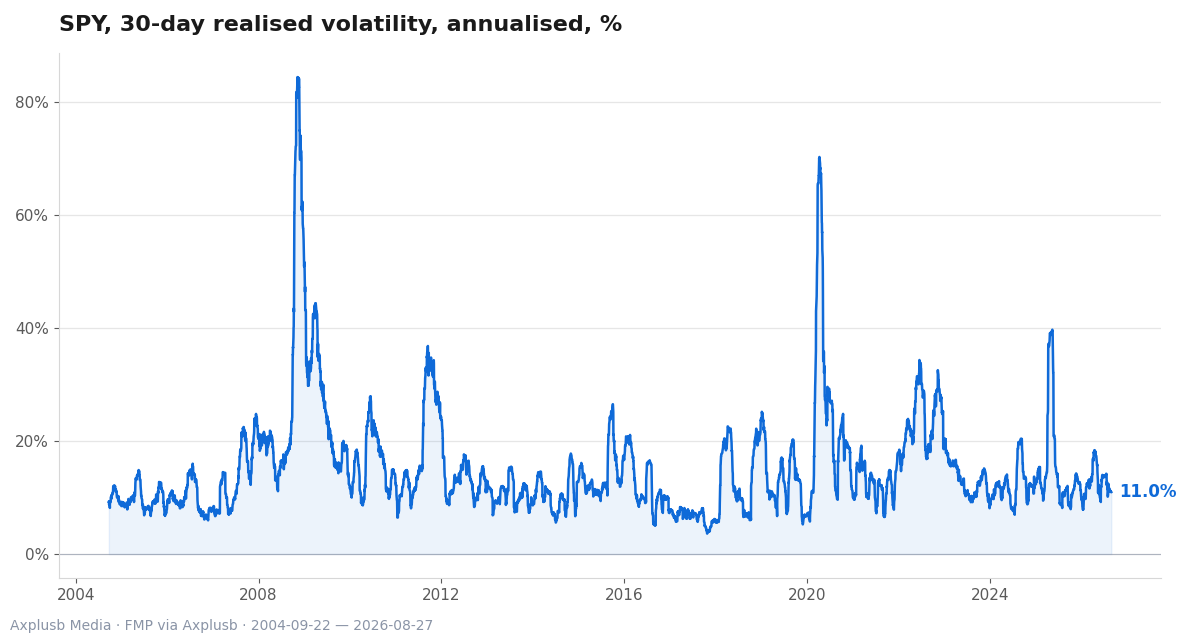
Start with the micro. The Review of Financial Studies paper tracks individual trades through inflation episodes and documents clear variation in responses. Some investors buy in ways consistent with hedging.
Others sell in patterns consistent with money illusion and a focus on nominal rather than real values. The study also shows that more skilled investors are less prone to these errors.
Layer on the news cycle. The Federal Reserve research on attention shows that the 2021 to 2023 CPI releases commanded unusual focus and elicited larger price reactions. The study links higher pre‑announcement attention to stronger moves and occasional overshooting.
Now consider the portfolio shell. AQR’s work catalogs periods when the usual stock–bond diversification broke down during inflation shocks. In those times, traditional 60/40 frameworks can deliver less protection than expected.
That reality forces investors to think carefully about alternative hedges or tilts. Finally, bring in subjective expectations. NBER research on households and firms documents that inflation beliefs vary across groups and can be biased upward for some.
Those beliefs affect spending and portfolio choices and help explain why investor actions diverge even when they read the same data. No single figure explains all the variance. Together, these strands offer a robust map from inflation psychology to trades and asset behavior.
Plausible counterarguments and alternative readings
One view says most of what we see is rational hedging. Investors rotate toward assets with better inflation properties, and the rest is noise.
Another view highlights behavioral panic and money illusion. The RFS evidence actually leaves room for both, since it observes buying and selling patterns that match each theory.
A second debate centers on policy. If policy is credible and acts promptly, expectations stay anchored and psychology does not entrench. The BIS is explicit about this anchoring channel and the role of policy in preventing de‑anchoring.
Skeptics also argue that attention spikes are a sign of healthy information processing. The Fed evidence complicates that picture by tying high attention to occasional overreaction around CPI prints. The line between vigilant and jumpy is thin.
The lesson is to avoid monocausal stories. Inflation is both macro and micro, both rational and behavioral. Good process respects that mix.
Practical playbook for investors and institutions
Start with governance. Institutions that survive regime shifts write down in advance how they will respond. A major asset manager’s guidance in volatile markets calls for reviewing risk tolerance, rebalancing policy, liquidity, and spending rules. It also urges predefined governance to avoid ad‑hoc, emotional moves BlackRock’s guidance on navigating volatile markets.
Cash policy comes next. Keep enough cash for near‑term needs and match the rest to your horizon. Avoid the all‑cash reflex that inflation punishes. Retail guidance from a large manager emphasizes buffers, horizon alignment, and disciplined rebalancing over wholesale retreat.
Revisit diversification assumptions. If stock–bond diversification can fail in inflation shocks, plan for it. That can mean thoughtful tilts toward assets with better inflation resilience or the use of explicit hedges. Avoid overfitting to the last regime.
Finally, upgrade decision quality. The RFS evidence suggests skill reduces bias. Build checklists, use premortems, and track when a thesis changed because of evidence rather than because a headline felt loud. Consider how a simple, rule‑based rebalance can keep attention spikes from dictating trades.
Check how disciplined your portfolio really is. A one‑page policy can be more valuable than a perfect forecast.
Tactics for individuals under stress
– Pre‑commit to a rebalance band and schedule.
– Separate emergency cash from investment capital to reduce loss framing.
– Write down an inflation thesis and the conditions that would falsify it.
– Keep a “sources of edge” list that does not include guessing the next CPI surprise.
For habits that lower the emotional temperature when markets shake, see our note on Cultivating Investor Resilience. It has practical tips.
Policy and market implications: what to watch and why it matters ahead
Two pillars matter most. First, policy credibility and clear communication help keep expectations anchored. If inflation psychology entrenches, investor behavior changes in ways that make stabilization harder, not easier.
Second, the market’s attention engine. When attention clusters around inflation releases, the resulting volatility can wash over assets that have little to do with the data. The 2021 to 2023 experience showed how sensitive prices can become when inflation is the only topic in the room.
For investors, this argues for governance over guessing. For policy makers, it argues for steady messaging that earns belief. Both aim at the same target: a market where psychology does not run the show.
The work is less about perfect foresight and more about robust process. That is an attainable edge.
Related reading
- Understanding Behavioral Traps during Inflationary Periods
- Market Sentiment Analysis
- Cultivating Investor Resilience