Backtests are memory. They tell us how an idea would have behaved, then tempt us to believe it will behave again. In uncertain times, that temptation is expensive.
Advanced backtesting is how we resist it. It blends statistical discipline, execution realism and regime‑aware validation so a promising chart is less likely to be a mirage.
What “advanced backtesting” means in an age of uncertainty
At its core, advanced backtesting is a response to two linked problems. The first is data‑snooping, where we search the same history until something looks good. The second is the market we trade is not the market we tested.
Formal work has shown how even mild snooping can inflate statistical significance. Craig MacKinlay’s classic analysis derived this effect and confirmed it using Monte‑Carlo tests, a warning that is still relevant today MacKinlay’s NBER paper.
Under uncertainty, we need to correct for exploration, then test again with realistic costs and regimes. That is the heart of the modern toolkit: multiple‑testing corrections alongside execution‑aware, walk‑forward validation and scenario stress.
Why rigorous backtesting matters now
False discoveries have always been costly, but the bill is higher when regimes turn faster. A backtest that skates on thin in‑sample ice will crack the moment spreads widen or leadership rotates.
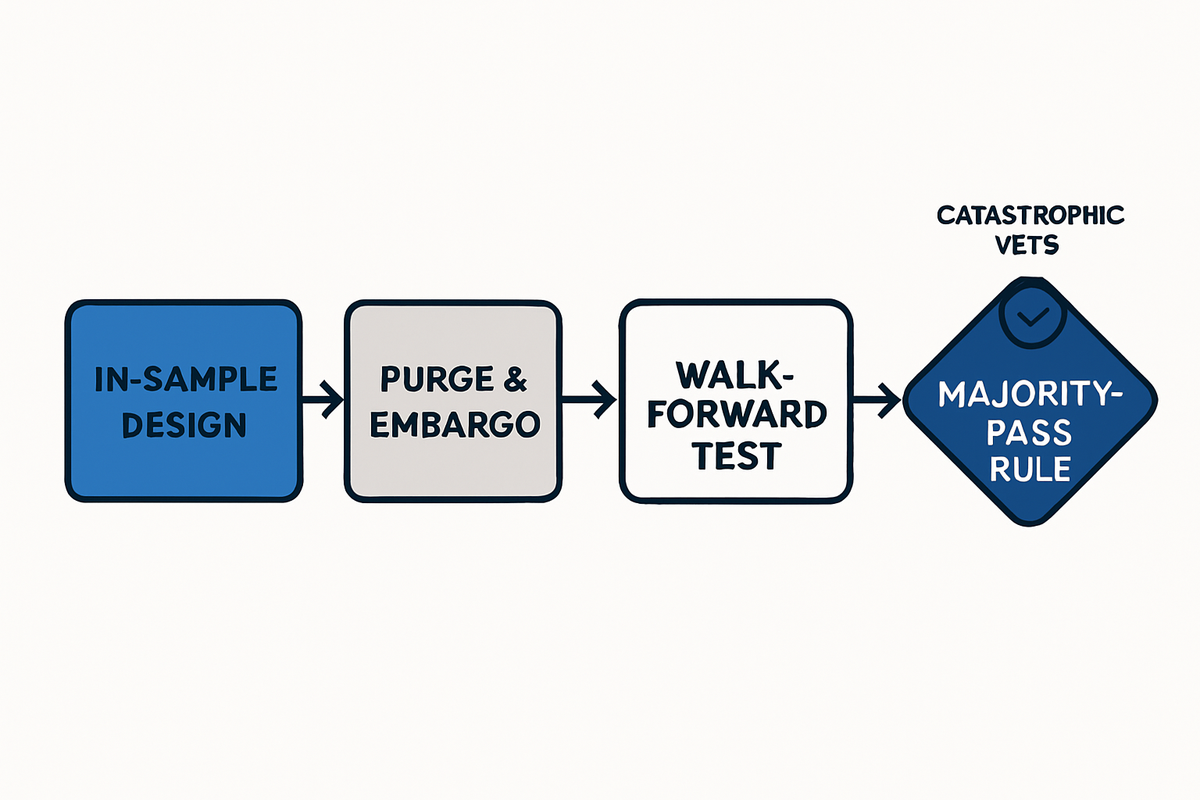
Recent protocols have formalised this problem into process. They move cleanly from in‑sample design to walk‑forward evaluation with purge and embargo gaps, then apply pass rules that are robust to one‑off luck. They also make the execution layer a first‑class test, not an afterthought.
Institutions do something similar with scenario engines and explicit cost models. They resample the path, vary the assumptions and see how often the story holds. This mindset aligns with Cliff Asness’s practitioner view that robust signals must survive across time, regions and assets, with a clear economic rationale Asness’s perspective on data mining.
If you build strategies, this is not overhead. It is the thing. Check how disciplined your research pipeline really is.
Core statistical pitfalls that break naive backtests
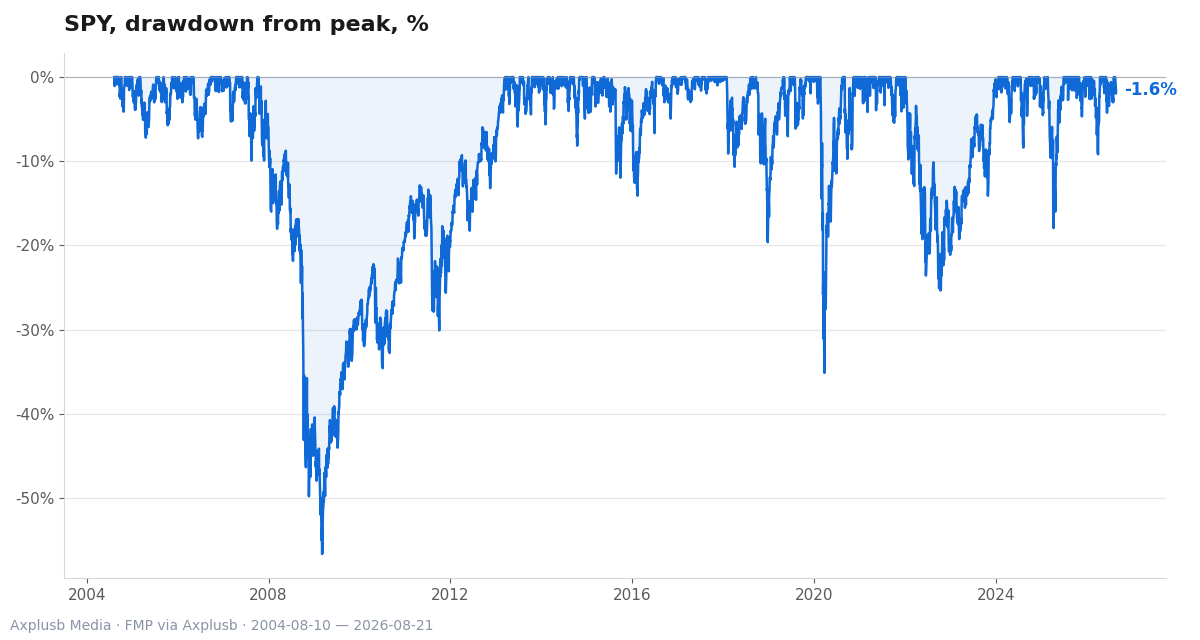
Three failure modes account for most broken backtests. The first is data‑snooping and multiple testing, the pressure to try ideas until the p‑value blinks green. The second is selection and survivorship bias, where we test on winners that did not exist in real time. The third is non‑normal returns, which distort “normal‑based” metrics.
MacKinlay’s work quantified the first. Search enough and standard inference starts to lie, even when the underlying signal is noise, which is a quiet but brutal finding MacKinlay’s Monte‑Carlo evidence.
Survivorship bias has a different shape. When failed funds or delisted stocks vanish from the test set, average historical returns drift up, and so does our confidence. Backfills and attrition effects compound the problem if we do not reconstruct the investable past.
Non‑normality is the third trap. Fat tails, skew and serial dependence make a naive Sharpe look more stable than it is. Any backtest that ignores these features will overstate precision and understate risk.
| Pitfall | What it looks like in tests | Primary remedy in practice |
|---|---|---|
| Data‑snooping / multiple tries | Many “good” variants on same history | Deflated Sharpe, PBO, out‑of‑sample gates |
| Survivorship / selection | Universe omits delistings or backfills | Rebuild history, include attrition effects |
| Non‑normal returns | Smooth Sharpe, ignored drawdown clustering | Non‑normal corrections, regime tests |
| Execution neglect | Zero slippage, instant fills, no liquidity cap | Market‑impact model, schedule constraints |
Empirical evidence and institutional case studies
The warnings are not only conceptual. MacKinlay’s formal derivations show the math of inflated significance under snooping, and his simulations make the effect tangible the NBER analysis of data‑snooping.
Survivorship has been measured in practice. Studies of mutual funds documented how excluding dead funds biases returns upward, and how backfilled histories can make past performance glow. If your universe breathes only through survivors, your signal will look fitter than it is.
On the constructive side, institutional templates illustrate good hygiene. Large asset managers run Monte‑Carlo resampling of return drivers and layer in fee and cost assumptions before they bless a model. They also track how conclusions move when assumptions are nudged, not just when they are perfect.
This is the thread running through robust research. Derive the bias, quantify it and then build the process that makes repeating it harder.
Execution realism — market impact, slippage and implementation shortfall
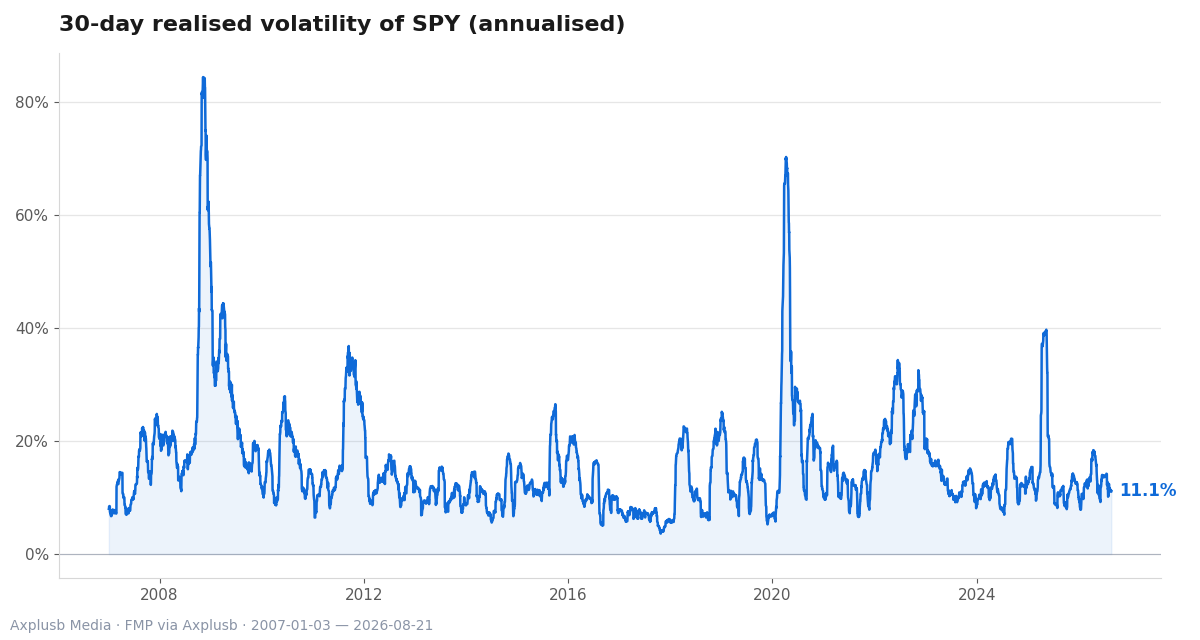
Most backtests spend returns that execution never earns. That gap has a name: implementation shortfall. It comes from market impact, slippage, and scheduling risk.
A standard way to structure this problem splits impact into permanent and temporary parts. The permanent part moves the price level, the temporary part decays with time. Optimal execution then trades off cost against risk by shaping the schedule, not by assuming instant fills.
This is not only for large funds. Even at modest size, spreads, queues and liquidity caps change realized P&L. Execution‑aware tests that include spread guards and leverage gates reduce the tendency to pass strategies that only work with magical fills.
Embedding such models into backtests is a design choice, not a calibration flourish. It moves “execution” from a footnote into the core hypothesis test.
The modern anti‑overfitting toolkit
The best defence is plural. Use statistical deflation to correct your metrics, then add process rules that force the model to survive across time and frictions.
Statistical corrections — DSR & PBO
The Deflated Sharpe Ratio adjusts the reported Sharpe for the number of trials and for non‑normal returns. It is a direct answer to selection bias and snooping, and it forces you to ask how many attempts created the winner.
The same research program introduced the Probability of Backtest Overfitting. PBO estimates the chance that a chosen strategy will underperform out‑of‑sample relative to the median variant. If PBO is high, your “edge” is likely the child of chance.
These corrections do not kill exploration. They price it. They turn “nice line, good Sharpe” into “nice line, but here is the risk it was luck.”
Processual defences — WFA, purge/embargo, Monte‑Carlo resampling
Walk‑forward analysis splits time into design and test windows that roll forward. You fit the model on one slice, then lock parameters and trade the next slice. You repeat across the sample to see if it works when the future is actually out‑of‑sample.
Two small rules make WFA much stronger. Purge and embargo gaps remove leakage around rebalancing and events, which stops near‑term bleed from flattering results. Majority‑pass rules and catastrophic vetoes keep one hot window from carrying the vote.
Monte‑Carlo resampling completes the picture. Instead of a single historical path, you generate plausible scenarios for the key drivers and run the strategy through them. The question becomes “how often does it work,” not “how high is the single backtest line.”
If this feels strict, it is. It is also how you stay in the game when regimes lurch. For a complementary view on designing stress paths, see our tail‑risk research on shock scenarios.
Alternative and regularisation approaches to reduce overfitting
Statistical deflation is not the only tool. You can also reduce the model’s capacity to memorize noise. One family does this with explicit penalties on complex, unstable fits.
Covariance‑penalty methods adjust risk metrics to discourage solutions that lean on fragile covariance structure. In tests across many assets, pairing these penalties with Total Least Squares reduced overfitting compared with unpenalised approaches.
This is not a silver bullet. It is a lever. Use it alongside WFA and DSR, then measure whether the penalty improved out‑of‑sample robustness or only trimmed returns.
When your research uses machine learning, regularisation is even more important. We discuss model capacity and validation pitfalls in our guide to AI‑driven backtesting.
Regulatory and governance guardrails for backtesting pipelines
If you run risk‑sensitive strategies, regulators expect backtests to meet basic standards. The Basel Committee’s framework set out backtesting expectations for risk models, including the “traffic‑light” approach and the need to align the test with the model’s confidence level the BCBS 22 framework.
These ideas generalize to strategy validation. Document your test logic, the pass and veto rules, and the mapping from metrics to decisions. Tie your chosen confidence levels to the risk you actually take.
Governance is a habit, not a binder. Track model changes, cost assumptions and scenario settings, then record who approved what and when. That audit trail will save time the day you need to explain a drawdown.
Finally, build cost assumptions that stand up to review. Institutions often benchmark them across desks and time, then test sensitivity. Borrow that discipline for your own pipeline.
Practical workflow and checklist for a production backtest pipeline
A good pipeline is a sequence of small, strict steps. Each step answers a narrow question, then hands the baton to the next.
Rebuild the investable history first. Include delistings and backfilled assets so your universe matches what a real investor saw. That alone can change the sign of a strategy.
Add execution realism next. Use a market‑impact model with permanent and temporary components, and constrain schedules by liquidity and spreads. Then set leverage gates that reflect the true cost of financing and the risk of slippage.
Design your research loop around IS → WFA. Fit in‑sample on a clean window, purge and embargo edges, then walk forward with locked parameters. Apply majority‑pass rules and allow catastrophic vetoes when a window fails outside pre‑set limits.
Stress with scenarios. Build Monte‑Carlo paths for your key drivers, run the model through them and count the fraction of passes. Afterwards, deflate your Sharpe and estimate PBO so your reported performance reflects multiple tries and non‑normality.
End with governance. Log decisions, archive code and parameters, and map your tests to confidence levels consistent with supervisory guidance. Then schedule re‑validation when markets or inputs shift.
- Reconstruct universe with delistings and backfills, then freeze point‑in‑time data.
- Embed impact, slippage and schedule constraints before any performance pass.
- Run IS → WFA with purge/embargo, majority‑pass and catastrophic‑veto rules.
- Monte‑Carlo scenario resampling of return drivers and costs, with sensitivity notes.
- Compute DSR and PBO, then compare to un‑deflated metrics before any go/no‑go.
- Maintain governance logs, versioned code and confidence‑level alignment.
Want a simple test of pipeline health? Try to reproduce your own result from scratch in a week. If you cannot, the process is not ready for risk.
Trade‑offs, open debates and where research is heading
Stricter tests can reject true signals. Penalties can turn a lively edge into a dull line. This is the main counterargument, and it has merit.
Two replies help. First, process makes the trade‑off explicit by stating pass rules and the cost of exploration up front. Second, the market does not care if our p‑values were heroic, it cares if live P&L shows up after spreads and shifts.
Practitioners also note that some robust effects have survived decades and many datasets. Asness argues that data mining is real, yet many factors endure out‑of‑sample when tested across time, regions and assets, with a sound economic story behind them the AQR practitioner view.
Methodology is moving as well. Covariance‑penalties and related regularisation tools continue to evolve. Execution‑aware WFA protocols have become more precise, with explicit spread and leverage guards. And scenario design is improving as we learn more about tail behavior, a theme we explore in our drawdown‑management piece.
When the environment is noisy, the best edge is humility backed by process. Build the pipeline that keeps you honest, then let the data argue with the story.
Call it a sanity check for the next decade. Build once, validate often.
Related reading
- Navigating Tail Risk in Uncertain Markets: Advanced Strategies for Portfolio Protection
- Utilizing AI for Backtesting: How Advanced Algorithms Are Revolutionizing Strategy Validation
- Advanced Techniques for Managing Portfolio Drawdowns in Volatile Markets