Rate hikes feel simple on paper. A central bank raises the policy rate to slow demand and cool inflation. Markets, and the people in them, live the messy version.
When rates climb, investors face two problems at once. Prices move as the cost of money resets, and minds react to shifting income and fear of loss. The result is churn that often harms long‑term plans more than the hike itself.
Framing the problem: investor psychology when rates rise
Low rates shape habits. When policy rates sit near the floor, many investors “reach for income” by buying higher‑yielding stocks over safer bonds, a pattern documented in NBER W25344 on reaching for income.
That habit sets a trap when rates rise. Income that once seemed scarce returns in safer bonds, yet portfolios are heavy in equity that now faces a higher discount rate.
The Bank for International Settlements calls this the risk‑taking channel. Prolonged low rates support greater leverage and a sense of lower risk, which later unwinds when policy tightens, as described in the BIS risk‑taking channel analysis.
Add loss aversion and you have a classic squeeze. Investors hate losses more than they like gains, which primes panic just when staying the course matters most.
Why this matters now: market mechanics and policy transmission
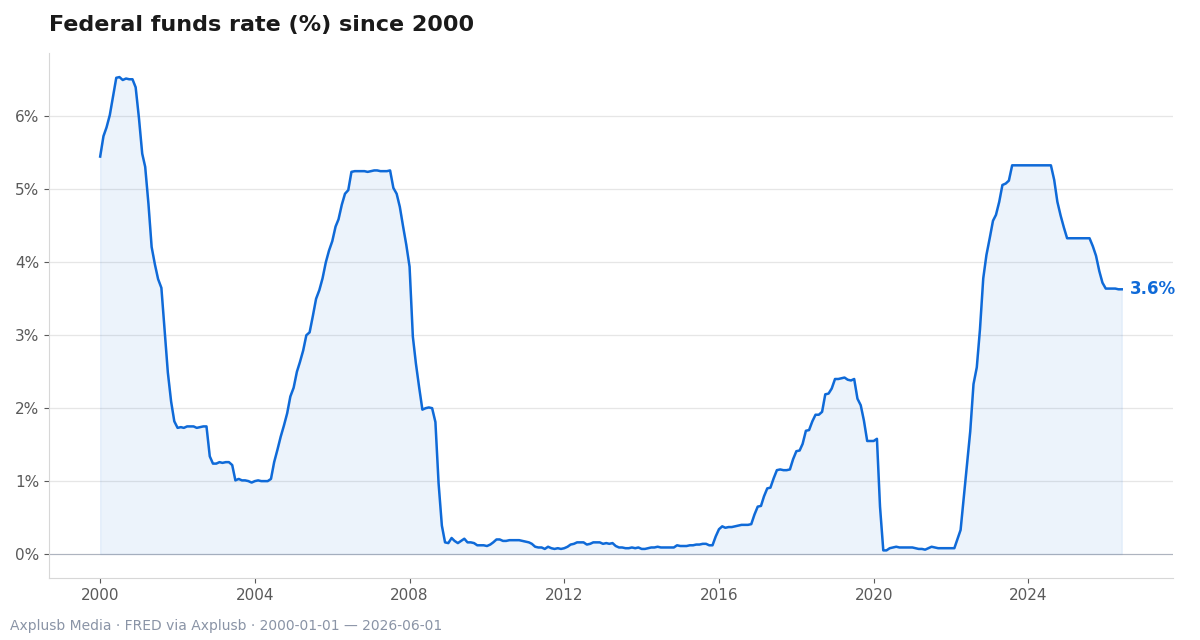
Rate hikes change the price of time. They lift discount rates, shift risk premia, and make duration more sensitive to each policy step. These mechanics push valuations and spreads around, sometimes with speed.
Central bank officials have been clear on the link from policy to risk appetite. Tighter policy tends to cool the willingness to bear risk and can widen yield spreads, which channels through to asset prices and credit conditions.
There are practical responses within fixed income. The BlackRock Investment Institute highlights the case for short‑duration exposure when yields rise and stresses active management of duration across the cycle, as laid out in BlackRock’s 2024 Investment Perspectives.
Sector effects are part of the story as well. Some sectors gain from higher short rates or steeper curves, while others face headwinds, which argues for selective tilts rather than blanket exits.
The behavioral mechanics: how and why investors react
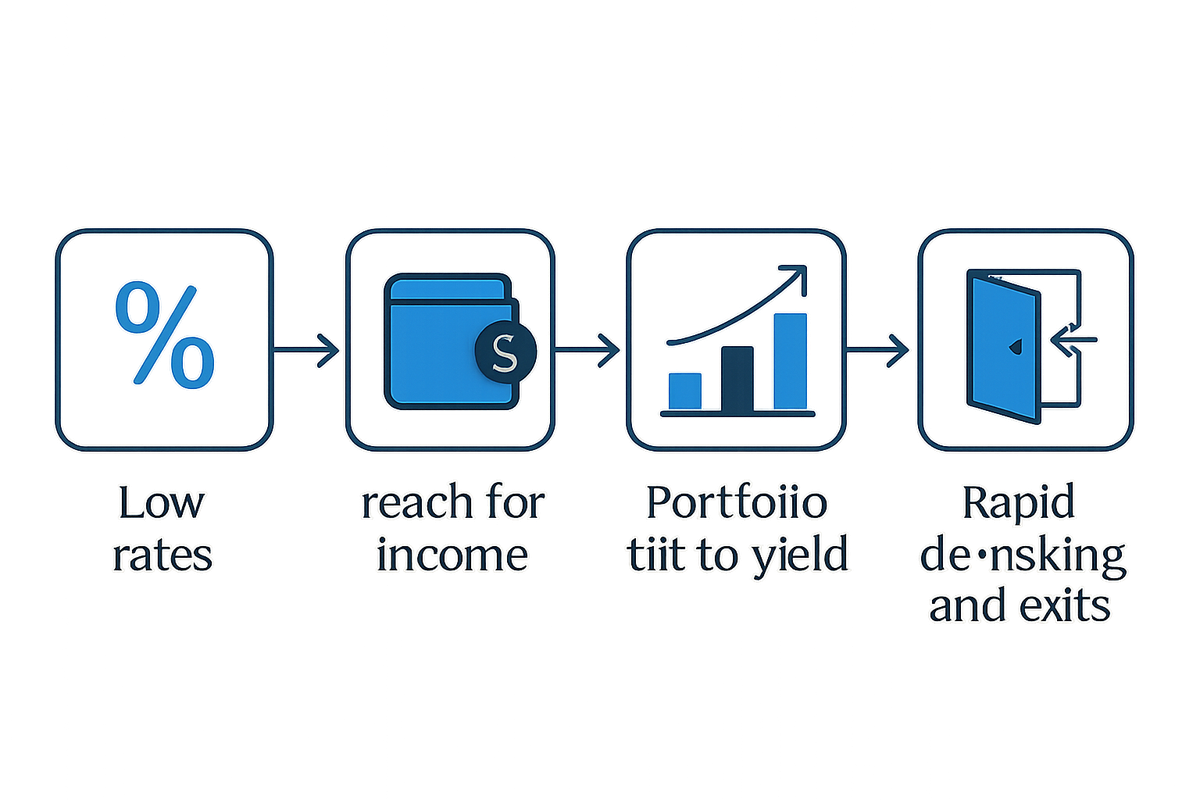
Three forces often drive the first moves. The first is the reach‑for‑income impulse that formed in the low‑rate years and lingers when rates rise, shown in NBER W25344’s evidence on income‑seeking tilts.
Second is how expectations form. Classic models show that investors can project rates in very different ways, and those differences lead to different portfolio choices, a point developed in the NBER study on long‑term rate expectations from 1980.
Third is mental accounting. Many investors track dividends and coupons as “income” in a separate mental bucket, which can push them into yield at the wrong time and out of duration right before it helps.
These biases are well known in practice. The CFA Institute underscores loss aversion, recency bias, and mental accounting, and recommends goals‑based framing and pre‑committed rules to cut their impact.
For a deeper look at these traps in live markets, see our guide to behavioral traps during inflationary periods.
The pre‑hike setup: why low rates amplify later de‑risking
Search‑for‑yield periods do not only change holdings. They also change perceived risk. The BIS notes that low rates can make volatility appear lower and encourage leverage, which sows the seeds for sharper unwinds later, as shown in its 2009 review of the risk‑taking channel.
When policy turns, that easy stance reverses. The same NBER evidence on income seeking implies that investors who piled into higher‑yield stocks may feel doubly exposed as safe yields return and equity valuations compress, as shown in the W25344 paper on income‑seeking tilts.
Transmission runs through confidence as well as cash flows. Policymakers have noted that tighter policy tends to curb risk appetite, which helps explain faster de‑risking and wider spreads during hiking phases.
This chain explains why drawdowns sometimes feel worse than the macro data suggests. The move is not only about earnings or growth, it is about position resets built up in the prior regime.
Common investor misconceptions during hiking cycles
Myth one: all bonds are bad when rates rise. In practice, duration drives most of the mark‑to‑market pain, which is why short‑duration fixed income tends to be more resilient in hiking phases, a point stressed in BlackRock’s 2024 perspectives on duration.
Myth two: the latest rate move proves a new permanent regime. Expectations can be rational, trend‑following, or otherwise formed, and each method points to a different path for future rates, as the NBER expectations study shows.
Myth three: emotional timing can beat rules in a volatile cycle. The CFA Institute argues for policy ranges and pre‑committed rebalancing, because bias, not insight, often drives abrupt shifts.
If you want a broader map of how fear and facts interact during stress, see our overview of bear‑market psychology.
Empirical patterns and illustrative cases
Across cycles, several patterns stand out. Investors tilt toward high‑dividend equities when rates are low, then reverse as policy tightens, a behavior documented in NBER W25344’s analysis of reaching for income.
Risk appetite follows the policy stance. The BIS finds that long low‑rate periods foster risk‑taking and leverage, which later unwind when conditions tighten, as set out in its risk‑taking channel review.
Practitioners have codified the response. BlackRock outlines duration management and sector selection under changing rate regimes, and J.P. Morgan describes rebalancing as a risk tool rather than a timing bet.
The table below links each pattern to likely portfolio effects and a practical counter.
| Pattern in hikes | Portfolio effect | Evidence cited | Practical counter |
|---|---|---|---|
| Reach for income unwinds | Equity income underperforms safer yield | NBER W25344 | Shift some income needs to short-duration bonds |
| Risk appetite drops | Wider spreads, valuation compression | BIS risk-taking channel | Maintain diversification, avoid forced deleveraging |
| Overreaction to headlines | Whipsaw trades and cash drag | CFA refresher | Use pre-set bands for rebalancing |
| One-size-fits-all views on bonds | Missed carry in short duration | BlackRock 2024 | Actively manage duration by bucket |
Want to see how these patterns play out in active models? Explore our piece on quantitative ETF rotation under inflation pressure.
Counterarguments and alternative strategies
Some investors accept higher tracking error to tilt into sectors that may benefit from higher short rates. That is reasonable if it follows a policy and a risk budget, which BlackRock’s work helps frame.
Others argue for active duration overlays rather than wholesale de‑risking. That approach can trim sensitivity to further hikes without abandoning income or diversification, a core point in BlackRock’s guidance on duration management.
What about diverging rate views across models? The NBER expectations study shows that different expectation rules can justify distinct positions, which supports plural but disciplined strategies.
The through line is governance. If an investor chooses a tilt, it should be inside pre‑agreed ranges, with triggers that return the portfolio to plan.
A practical playbook to stay the course
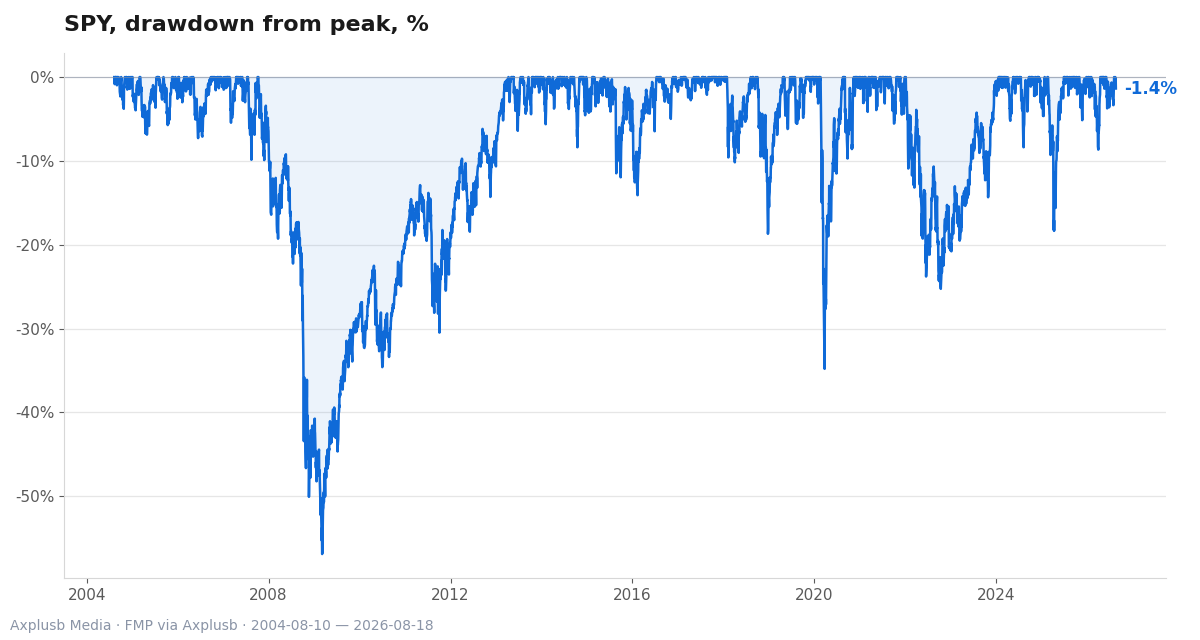
Good process beats good nerves. Here is a compact playbook that folds macro, behavior, and practice into steps you can follow.
Governance that resists impulse
– Write or refresh an investment policy statement that ties goals to ranges for equity, credit, and duration, a method the CFA Institute endorses.
– Define rebalancing bands by asset class, and pre‑commit to act when weights breach them rather than on headlines.
– Set rules for cash uses and tax checks, including thresholds where the tax cost of rebalancing pauses the trade until quarter‑end.
– Document an exceptions protocol. It should require a written reason and a cool‑off period before any off‑policy move.
Tactics that fit a hiking phase
– Segment fixed income into short, core, and long duration buckets. Overweight the short bucket when yields rise, which reflects BlackRock’s emphasis on short duration in rising‑rate phases.
– Keep an income ledger. Move a clear share of cash flow needs to bonds rather than equity income while hikes persist, consistent with evidence on prior income tilts in NBER W25344.
– Maintain sector flexibility. Allow small, time‑bound tilts where rate sensitivity is clear, and set an exit date for each tilt.
– Align risk with expectations. If your expectations model points to a plateau rather than a pivot, scale duration moves and review them monthly.
Rebalancing, done like risk management
– Treat rebalancing as insurance. J.P. Morgan frames it as a way to keep risk in range, not as a call on the next move.
– Use a blended schedule. Check bands monthly, execute at quarter‑end unless bands are hit hard, then act sooner.
– Net trades to reduce tax and cost. Where possible, pair gains with losses and shift within families to minimize frictions.
– Track compliance. A simple checklist at each meeting keeps the plan honest and quieter minds prevail.
- Check how disciplined your portfolio really is.
- Share this playbook with your advisor before the next policy meeting.
Putting the psychology next to the plumbing
It helps to line up the behavioral story with the market plumbing. Low rates coax risk and tilt portfolios toward income, as shown in NBER W25344 on income seeking.
Policy hikes then do two things at once. They reduce the willingness to bear risk and raise discount rates, which widens spreads and pressures longer duration.
Investors who planned for that two‑step react with calibration. They shorten duration at the margin, rebalance on rules, and keep equity allocations anchored to goals.
Those who do not plan often do the opposite. They sell late, chase short‑lived rallies, and pay away return in taxes and costs.
Illustrative guardrails, not iron laws
No single rule fits all cycles. The NBER study on expectations shows why reasonable investors see different paths for rates and act on them.
The BIS lens adds a warning. If the past was long and easy, the snap back can be sharp, which argues for more liquidity and less leverage during hikes, as documented in the BIS review of the risk‑taking channel.
BlackRock’s practitioner take offers the middle path. Use duration as a dial, not a switch, and keep sector tilts within a budget, as set out in its 2024 perspectives on regime change.
The CFA toolkit rounds it out. Goals‑based framing and pre‑committed bands are unglamorous, but they work when nerves start to fray.
A quick reference: symptoms and fixes
Use this grid when the next rate headline hits. Match what you feel to what you should do, then act on the rule.
| Symptom | Likely bias | Typical move | Better move |
|---|---|---|---|
| Panic at red screens | Loss aversion | Sell equities to cash | Rebalance to target weights |
| Chasing high dividend yields | Income seeking | Overweight equity income | Fund income needs with short-duration bonds |
| Assuming hikes never end | Recency bias | Dump duration entirely | Keep a core, trim at the margin |
| Ignoring tax costs | Narrow framing | Trade too often | Batch trades, net gains and losses |
If a symptom is not on the grid, write it down anyway. Naming it usually lowers its power.
Closing synthesis: calibration, not paralysis
Rate hikes change risk, but they do not demand panic. The macro link is clear enough, and so are the behavioral traps that make drawdowns worse than they need to be.
The evidence helps. Low rates fuel a reach for income and a sense of safety in risk assets, as shown in NBER W25344 and the BIS review of risk‑taking.
Practitioner playbooks are clear too. Active duration, selective sector tilts, and rules‑based rebalancing can carry a plan through a hiking phase, as described in BlackRock’s 2024 perspectives on rising rates.
The right stance is steady. Calibrate, do not capitulate, and let the process do its work.
Related reading
- Understanding Behavioral Traps: How Investor Psychology Influences Market Reactions During Inflationary Periods
- The Psychology of Bear Markets: Navigating Investor Behavior in Tough Times
- Quantitative ETF Rotation Strategies: Adapting to Inflationary Pressures